



Wide Fit Barefoot Shoes with Wide Toe Boxes
If your shoes pinch or leave your toes cramped, you may need wide toe box shoes rather than simply a larger size. The problem usually isn't your feet, it's the shape of the shoe. Sizing up in a conventional shoe adds length but doesn't fix a toe box that tapers to a narrow point. Barefoot shoes are different: they're shaped more like an actual foot, with a wide, foot-shaped toe box that gives your toes the room they need.
Free UK delivery on orders over £130.
This page serves as our main UK guide to wide-fit barefoot footwear across everyday, work, and active styles. If you already know your specific fit needs, explore our dedicated guides for women's wide fit barefoot shoes, men's wide fit barefoot shoes, or kids' wide fit barefoot shoes. If standard wide styles still feel restrictive, view our extra wide barefoot shoes, or read our advice for a wide forefoot with a narrow heel.

Shop Wide Fit Barefoot Shoes

JOSEF SEIBEL Wynona 14


JOSEF SEIBEL Wallace 07


Merrell Vapor Glove 6 LTR - Brown Teens

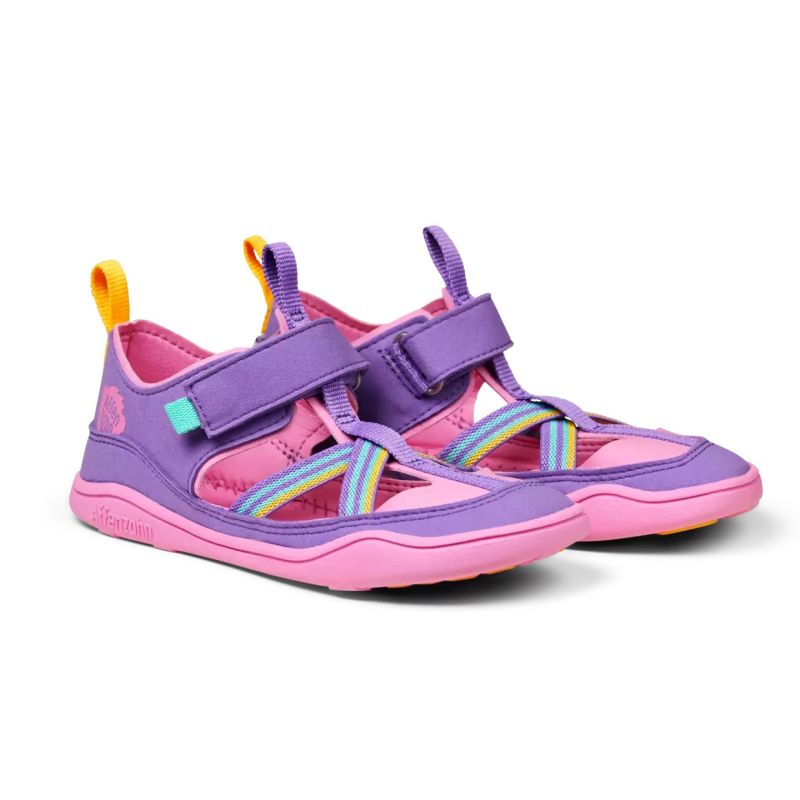
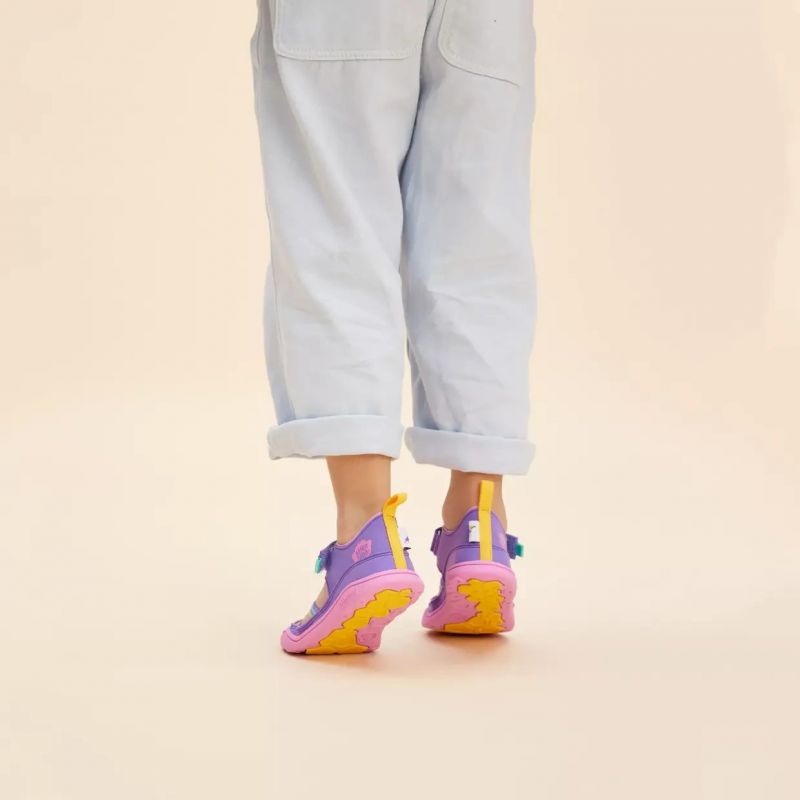
Affenzahn Breezy Vegan Sandals - Toucan Kids
When "Wide Fit" Still Isn't Wide Enough
Conventional shoes are built around a tapered, pointed shape that doesn't match the natural width of a human foot. Even shoes labelled "wide fit" often add volume without changing the toe box shape.
Pinching at the toes
Narrow toe boxes can squeeze the toes together and may be uncomfortable for people who need more room at the front of the shoe. A foot-shaped toe box gives toes space to sit in their natural position.
Tight across the forefoot
When a shoe is too tight around the forefoot, it can feel restrictive and uncomfortable by the end of the day. This is a sign the shoe doesn't match the width of your foot.
Cramped toe box
Most "wide fit" shoes are wider at the ball of the foot but still taper to a narrow point at the toes. Your toes need room to spread naturally, and without it, the shoe never quite feels right.
The problem isn't your feet. It's your shoes. Barefoot shoes are designed around the natural shape of a human foot, wide at the toes, flat from heel to forefoot, and flexible enough to move with you.

What Makes a Wide Toe Box Barefoot Shoe Suitable for Wide Feet?
Most shoes labelled "wide fit" add volume across the whole shoe but still taper at the toes. A barefoot shoe takes a different approach: it is shaped like an actual foot, widest where your toes are. Here is what makes a barefoot shoe suitable for wide feet, and why barefoot shoes differ from conventional shoes in ways that matter for fit:
Foot-shaped toe box
The toe box should be widest at the ends of your toes, not at the ball of your foot. This lets your toes spread naturally, the way they do when you are barefoot. A foot-shaped toe box gives the toes more room to sit in a natural position.
Zero-drop sole
Conventional shoes have a raised heel that tilts your posture forward. Zero drop means the heel and forefoot are at the same height, the same as standing barefoot. This encourages a more even distribution of weight across the whole foot.
Flexible construction
Thick, rigid soles restrict your foot's natural movement. Each foot has 33 joints and over 100 muscles, tendons, and ligaments that work together as you walk. A thin, flexible sole allows your toes to splay and your foot to flex more naturally.
Foot volume
Width is only part of the picture. Feet also vary in volume, how much vertical space they take up inside the shoe. Some barefoot brands offer removable insoles or adjustable closures, so you can adjust the interior volume to suit a higher or lower instep.
Why sizing up is not the answer
Going up a size in a conventional shoe adds length, not width at the toes. The toe box still tapers to the same narrow point, so your toes are still squeezed. A properly fitted barefoot shoe addresses the shape of the toe box, not just the overall size of the shoe.
Wide Toe Box Shoes vs Wide Fit Shoes
A shoe can be marketed as "wide" and still not give your toes enough room. The difference between wide fit shoes and wide toe box shoes is where that extra space is provided. Many conventional wide-fit shoes add volume across the whole shoe, but the toe box often keeps a tapered shape. Where the shoe is wide matters as much as how wide it is. Foot-shaped barefoot footwear is designed around natural foot geometry, widest at the toes, so the width is where your feet actually need it.

| Traditional Wide Fit | Foot-Shaped Barefoot |
|---|---|
| Often tapered or pointed at the toes | Foot-shaped, widest at the toes |
| Typically features an elevated heel | Zero-drop (heel and forefoot level) |
| Often stiffer, thicker sole construction | Thin and flexible sole |
| Can restrict natural toe splay | Allows toes to spread naturally |
| Frequently a scaled-up standard last (higher overall volume) | Designed to match the human foot |
Who are wide fit barefoot shoes for?
Wide fit barefoot shoes suit a range of foot shapes and widths. If you struggle to find comfortable footwear, one of these might sound familiar.
Wide feet
For people who need more room than conventional shoes allow and want a genuinely foot-shaped fit with space for natural toe splay. Browse our wide barefoot shoes to compare styles.
Extra-wide feet
For people whose feet need particularly generous width and volume, and who may find standard wide barefoot shoes insufficient. Brands like PaperKrane, Beda, and Be Lenka offer especially roomy toe boxes: explore our dedicated collection of extra wide barefoot shoes.
Wide forefeet
If the front of your foot is wider than a standard shoe allows, a foot-shaped toe box gives your toes room to spread without the shoe pinching at the sides.
Narrow heels with a wide forefoot
Some barefoot shoes combine a generous, foot-shaped toe box with a more secure heel and midfoot fit, which can work particularly well for people whose forefoot is wider than their rearfoot.
Conventional wide-fit shoes still too narrow
Many shoes labelled "wide fit" add volume but keep the same tapered toe box. If your toes still feel squashed in wide-fit footwear, a foot-shaped barefoot shoe addresses the shape of the toe box, not just the overall volume.
Still not sure which fit suits your feet? Learn how to measure your feet at home, or complete our Shoe Match Assessment for personalised suggestions.
Wide Forefoot, Narrow Heel? You May Not Need a Simply Wider Shoe
When your toes feel cramped in standard footwear, your first instinct is usually to search for a wider shoe. But if you have a fan-shaped or triangular foot profile, a uniformly wider shoe is often the wrong answer.
Many conventional wide-fit systems (such as E or EE fittings) increase overall width and volume together across the entire shoe. While this can provide extra room across the ball of the foot, it often means the heel cup, ankle collar, and instep are scaled up as well. For someone with a wide forefoot and a narrower rearfoot, a shoe can offer more overall width and volume without offering the right proportions, which can result in loose heel hold, friction, and toes having to grip to keep the shoe stable.
What fan-shaped feet actually need is an anatomical combination fit: a toe box shaped like real human toes that allows full natural splay, paired with a secure, contoured heel that anchors your foot in place.
Brand Fit Variations for Fan-Shaped Feet
Barefoot brands vary considerably in how they balance forefoot width and rearfoot volume:
- BLUSUN: Combines a generous anatomical toe box with a snug, contoured heel cup, making it exceptional for slender ankles and low-to-medium volume feet.
- Angles: Features an asymmetrical toe box and structured European leather heel counter designed to support secure rearfoot hold in smart-casual wear.
- Rayve: Delivers broad toe splay with adjustable lace-to-toe fastening for personalised midfoot security.
- PaperKrane: Delivers maximum width for extra-wide forefeet while maintaining firm lace-up adjustability.
Whether you're looking for wide toe box trainers, walking shoes, boots or everyday footwear, our barefoot range is selected for natural foot shape and generous room around the toes.
Wide Toe Box Barefoot Shoes for Women
Our women's range includes wide toe box barefoot shoes for everyday wear, work, walking and active use, with styles ranging from moderate width to extra-wide fits.
Read more about why women's feet need wide fit shoes, or explore Angela's story of switching to barefoot shoes after 20 years in conventional footwear.
For a dedicated guide, visit our women's wide fit barefoot shoes page.
Shop Women's Wide Fit →
JOSEF SEIBEL Wynona 14
Wide Barefoot Shoes for Men
Men's barefoot shoes combine wide toe boxes with styles that look at home in the office, the pub, or on the trail. From zero-drop trainers to leather everyday shoes, our men's range covers feet of all widths.
For a dedicated guide to men's wide fit barefoot shoes, visit our men's wide fit barefoot shoes page.
Shop Men's Wide Fit →
JOSEF SEIBEL Wallace 07
Wide Barefoot Shoes for Children
A foot-shaped shoe gives growing toes room to spread naturally. Our kids' range includes school shoes, trainers, and sandals from brands that build around the natural shape of a child's foot.
For more guidance on fitting children's wide feet, visit our kids' wide fit barefoot shoes page.
Shop Kids' Wide Fit →
How to Choose Barefoot Shoes for Wide Feet
Finding the right barefoot shoe for wide feet comes down to measurements, shape, and brand fit. Here is a practical approach to getting it right.
Measure both feet. Feet are rarely identical in size, so always use the longer measurement. Our guide on how to measure your feet shows you how to do this at home.
Choose the correct length. As a general guide, we recommend adding 8 to 12mm of comfort room for adults, or 15 to 18mm of growing room for children. This gives your toes space without the shoe being too loose.
Check the width and toe box shape. A foot-shaped toe box is widest at the ends of your toes, which is what makes a barefoot shoe suitable for wide feet.
Consider foot volume. If you have a high instep, look for shoes with removable insoles or adjustable closures that let you fine-tune the fit.
Check individual brand sizing. Each brand has its own last shape and sizing convention. Read the fit notes and size guide on every product page before ordering.
Powered by the BarefootBrit Fit System™. We physically measure the insole inside every shoe and verify it against manufacturer claims, so the sizing data on our product pages is real, not copied from a chart. Every product page includes automated comfort room calculations with Close Fit and Roomy Fit indicators, so you can choose exactly how you want your shoes to feel.
Most people are wearing the wrong shoe size. Read our guide on why most people are wearing the wrong shoe size, or complete the Shoe Match Assessment for personalised recommendations.
Powered by the BarefootBrit Fit System™
Rather than relying solely on manufacturer sizing charts, BarefootBrit’s width and fit guidance is built around our team’s own physical insole measurements.
Unlike generic barefoot retailers that simply reproduce manufacturer sizing charts, BarefootBrit's width and fit guidance is built entirely on our team's own physical insole measurements. We physically measure the inside of every single shoe model we stock and compare it against what the manufacturer claims. When a brand says a size 42 has a 27cm insole, we verify it. If the real measurement is different, we use the real one, not the number on the chart. That means every size recommendation on our product pages is based on a measurement we have taken ourselves inside the actual shoe, giving you reliable guidance before you order.
Verified insole measurements
Every size on our product pages comes from a physical measurement of the actual shoe, not a brand's stated spec. If the chart says 27cm and our tape measure says 26.5cm, we show you 26.5cm.
Automated comfort room
Enter your foot length and the system calculates your ideal size automatically, using our general recommendations of 8 to 12mm of comfort room for adults and 15 to 18mm of growing room for children. No manual maths, no guesswork.
Close Fit or Roomy Fit
The system flags whether a size gives you a snug Close Fit or a more relaxed Roomy Fit, so you can choose based on how you like your shoes to feel, not just whether they technically fit.
Not Sure Where to Start?
Complete the Shoe Match Assessment and we'll match you with the perfect wide fit shoes for your feet. Answer a few questions about your foot width, size, and preferences - and get personalised recommendations from our curated range.
Complete the AssessmentFrequently Asked Questions
Are barefoot shoes good for wide feet? +
For many people with wide feet, a barefoot shoe's foot-shaped design provides a more comfortable fit than conventional footwear. The toe box is widest at the ends of your toes, giving them room to spread naturally. Because the shoe is shaped like a foot rather than a tapered last, the width is where your feet actually need it. Browse our wide fit barefoot shoes to compare options.
What are the best barefoot shoes for wide feet? +
The best barefoot shoe for wide feet depends on your individual foot measurements, toe box shape, and foot volume. Brands like PaperKrane, Beda, and Be Lenka are known for particularly generous widths. We recommend measuring your feet first, then checking the insole lengths and fit notes on each product page. Powered by the BarefootBrit Fit System™, which uses verified insole measurements we have physically taken inside each shoe, not just copied from brand charts.
What barefoot shoes have the widest toe box? +
Toe box width varies between brands. PaperKrane and Beda are among the widest we stock, with toe boxes that accommodate very broad feet. Some models from Be Lenka and Blusun also offer generous room. The best approach is to compare insole lengths and toe box shapes across brands using the size guide on each product page.
Are barefoot shoes suitable for very wide feet? +
Many people with very wide feet find barefoot shoes more comfortable than conventional wide fit options, because the foot-shaped toe box provides room where it matters most. However, barefoot brands still vary in width, so it is worth checking individual brand fit notes. If your feet are particularly wide, start with brands known for extra-wide toe boxes like PaperKrane and Beda.
Do I need to size up if I have wide feet? +
No. Sizing up adds length, not width at the toes. The toe box still tapers to the same shape, so your toes remain squeezed. Instead, measure your foot length and add 8 to 12mm of comfort room for adults or 15 to 18mm of growing room for children, as a general guide. Our guide on how to measure your feet shows you how, and the BarefootBrit Fit System™ calculates the right size automatically on every product page, using insole measurements we have physically verified inside each shoe.
What is the difference between wide-fit shoes and barefoot shoes? +
Wide fit shoes scale up the volume of a standard shoe shape but often keep the same tapered toe box. Barefoot shoes are designed around the shape of a human foot: wide at the toes, narrower at the heel, with a flat (zero-drop) sole and a thin, flexible base. Both can offer more room, but only barefoot shoes address the shape of the toe box. See our wide fit comparison table for a side-by-side breakdown.
Are there wide barefoot shoes for women, men and children? +
Yes. We stock wide fit barefoot shoes for women, men, and children from a range of international brands. Browse our women's barefoot shoes, men's barefoot shoes, and kids' barefoot shoes collections. You can also visit our dedicated pages for women's wide fit barefoot shoes, men's wide fit barefoot shoes and kids' wide fit barefoot shoes.
Find the Right Wide Fit Shoes for You
Browse our curated collection of top international barefoot brands, stocked right here in the UK. Backed by our dedicated UK barefoot community, we are here to help you find the right fit.