



Powered by the BarefootBrit Fit System™
How to Measure Your Feet for Barefoot Shoes
Getting the right fit is everything in barefoot shoes. Learn how to measure your feet at home in centimetres - no fancy equipment needed. Works for adults and children.
Shoes Should Change Shape. Not Feet.
Why Barefoot Sizing Is Different
Barefoot shoes don't follow standard high-street sizing. Different brands use different lasts, toe box shapes, and internal measurements - so your usual UK size might not be the right fit across every brand we stock.
That's why we measure in centimetres. Once you know your foot length in cm, you can compare it against the size guide on any product page and find your perfect fit - regardless of brand. Whether you're shopping for women's barefoot shoes, men's barefoot shoes, or kids' barefoot shoes, the same measuring method works across our entire range.
As the UK's largest barefoot community, we've helped thousands of customers find their perfect fit. This guide covers everything you need to measure accurately at home.
Measure in centimetres for accuracy across all brands
Always measure both feet - one is usually longer
Add growing room to your measurement before buying
Foot Length Is Not Your Shoe Size
This is the most common mistake people make. If your foot measures 25cm, you do not buy the 25cm shoe. The sizes shown on our product pages refer to the internal/insole length of the shoe - not your foot length. You need to add extra room to your foot measurement first (growing room for children, comfort room for adults), then match that total to the insole length on the size guide.
So a 25cm foot + 0.8-1.2cm comfort room = 25.8-26.2cm. You'd look for a shoe with a 25.8-26.2cm internal length, not 25cm.
New to barefoot shoes? Read our guide on why barefoot shoes matter.
Once you've measured, browse our women's barefoot shoes, men's barefoot shoes, or kids' barefoot shoes and check each product's size guide.
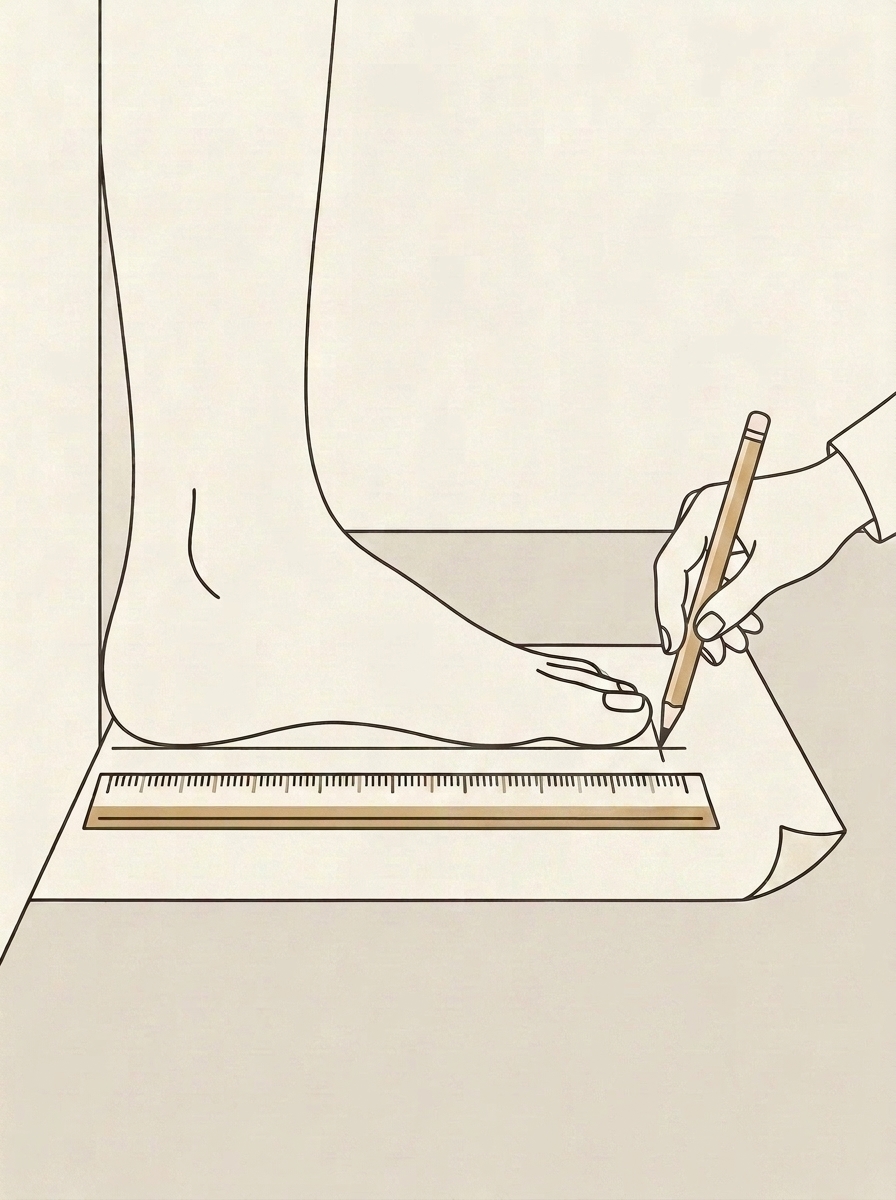
The Wall & Paper Method
The simplest and most reliable way to measure your feet at home. All you need is a sheet of A4 paper, a pencil, and a ruler.
Place a sheet of A4 paper on a hard floor, flat against a wall.
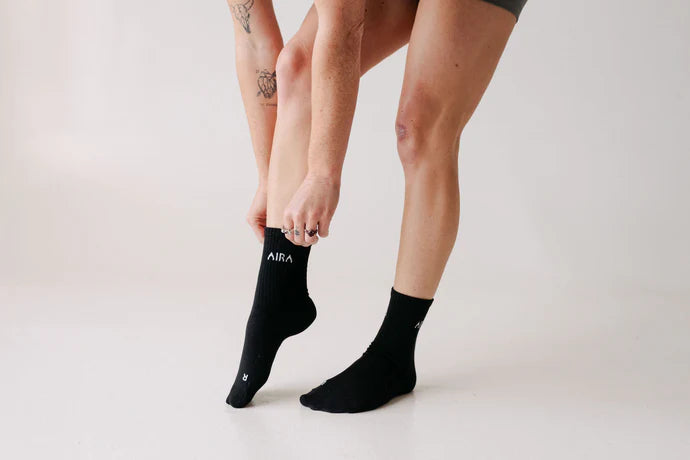
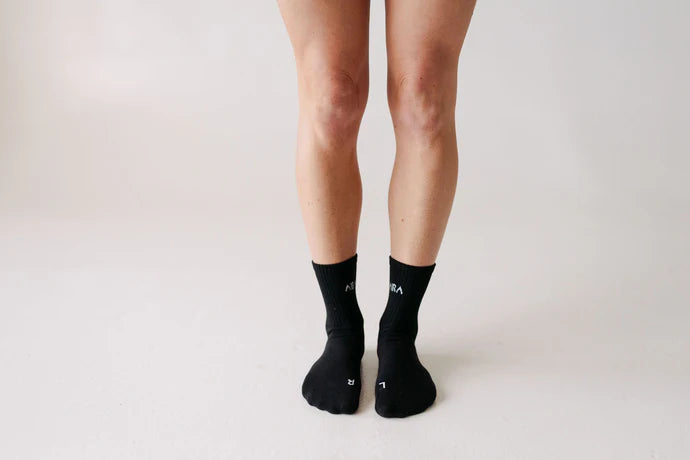
Stand on the paper with your heel touching the wall. Wear the socks you'd normally wear with shoes.
Mark the tip of your longest toe on the paper with a pencil.
Step off and measure from the wall edge to your pencil mark in centimetres.
Repeat for the other foot. Use the longer measurement as your foot length.
Important: The number you get is your foot length, not your shoe size. Shoe sizes on our product pages show the internal/insole length. You'll need to add extra room to your foot length (growing room for kids, comfort room for adults) before matching it to a size. See the Room Guide below.
Tip: Measure at the end of the day when your feet are at their largest. Feet naturally swell throughout the day, so an evening measurement gives you the most generous - and safest - fit.
Other Ways to Measure
No wall handy? Got a wriggly toddler? Try one of these alternative methods.
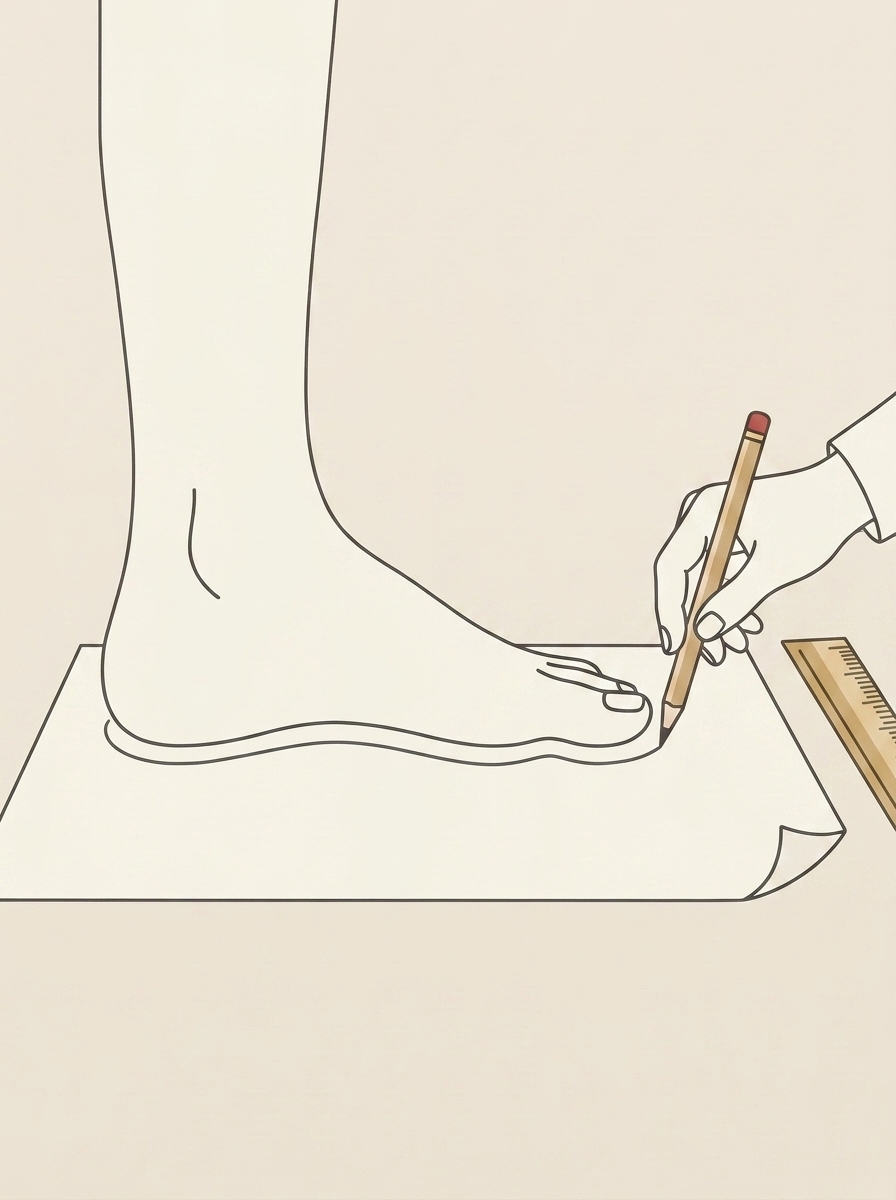
Drawing Around Your Feet
Sit down and place your foot flat on a sheet of paper. Trace around the outline with a pencil held upright. Then measure from the back of the heel to the tip of the longest toe.
Great for kids who can sit still, or if you can't stand against a wall. Make sure the pencil stays vertical for an accurate outline.
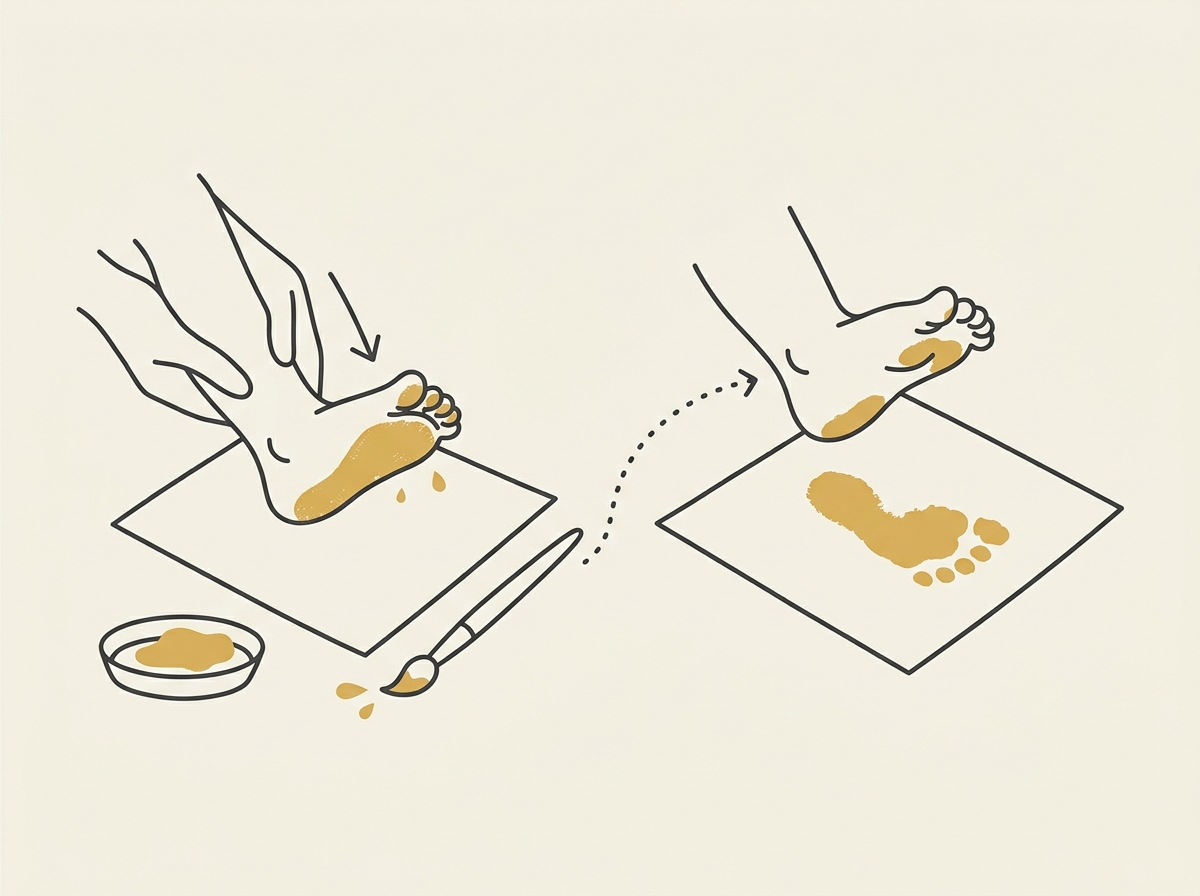
Foot Painting
For little ones who won't stay still, paint the sole of their foot with washable paint and press it onto paper. Measure from the back of the heel print to the longest toe.
Make it a game! Note that paint prints can be slightly small as they don't capture the full heel - add an extra 3-5mm to be safe.
Printable Template
Download our printable measuring guide for a ready-made template. Print at 100% scale (do not use "fit to page") and follow the instructions on the sheet.
Download PDF GuideCheck the scale guide on the printout before measuring. If it doesn't match a real ruler, reprint with "scale: 100%".
Room to Move Guide
Once you've measured your foot length, you need to add space for your toes to splay and move naturally. For children, this is growing room - space for their feet to grow. For adults, it's comfort room - space for natural toe splay and foot expansion throughout the day. Here's how much to add depending on the shoe type.

Adults
Comfort Room
0.8 - 1.2cm
Add this to your foot length, then match the total to the insole length on the product page.
Children
Growing Room
0.8 - 1.5cm
Kids' feet grow fast - they need a bit more space. Sandals need less, boots need more.
Sandals and first walkers need less room (towards the lower end). Boots and wellies need more (towards the upper end) to allow for thicker socks and foot expansion.
Example: Your foot measures 25cm. Add 0.8 - 1.2cm comfort room = 25.8 - 26.2cm. Look on the product page size guide for the shoe whose internal/insole length matches your result - that's your size, not 25cm.
Width Fitting
Width is just as important as length in barefoot shoes. A shoe that's too narrow will squash your toes, while one that's too wide can cause blisters and slipping.
To measure width at home, wrap a soft measuring tape around the widest part of your foot (across the ball of the foot). Compare this to the width measurements shown on each product page.
Not Sure About Width?
If you're between widths or unsure, start with "medium" - most barefoot shoes are naturally wider than standard shoes. You can always exchange within 30 days.
Have Bunions or Toe Pain?
Conventional wide shoes still taper inward at the toes. Read our UK Barefoot Shoes for Bunions Guide to discover how an anatomically straight medial edge prevents joint pressure. For sore or ingrown toenails, our Best Shoes for Ingrown Toenails guide covers the width and depth that protect the nail area.
Need Expert Help?
Send us a photo of your feet standing on your measurement paper and we'll help you pick the right size and width.
hello@barefootbrit.shopQuick Width Check
- Stand naturally with weight evenly distributed
- Measure around the ball of the foot (widest point)
- Compare to the width column on the product size guide
- If between widths, go wider - toes need room to splay
Do You Have a Wide Forefoot and Narrow Heel?
Understanding your foot's rearfoot-to-forefoot proportions is the missing key to finding footwear that fits without slipping.
The Natural Fan-Shaped Profile
When people describe having "duck feet", "triangular feet", or a "V-shaped" profile, they are describing one of the most common natural foot shapes in the UK. Rather than maintaining a uniform rectangular width from back to front, the foot begins with a neat, relatively slender heel and Achilles tendon, before fanning outward across the metatarsal heads (the ball of the foot) and through the toes.
This is completely natural human anatomy. When feet are unconstrained by narrow, tapered footwear, the toes naturally splay to create a stable, shock-absorbing base for balance and walking. However, conventional high-street sizing makes shopping for this shape exceptionally difficult. Standard shoes pinch your toes and rub big toe joints, while sizing up or choosing high-street wide fits leaves your heel swimming in empty space.
The Two-Person Paradox
Why measuring foot length and ball width alone does not tell the whole story:
- Person A: Measures 255mm length and 98mm ball width with a wide, robust heel. A standard high-street wide-fit shoe fills out evenly from front to back.
- Person B: Measures identical 255mm length and 98mm ball width, but has a slender ankle and narrow heel. In a standard wide shoe, their heel lifts out with every step, causing painful friction blisters and toe clawing.
Person B does not need a shoe that is broadly enlarged throughout its entire mould. They need an anatomical combination last: ample space across the forefoot combined with a tailored, contoured heel cup.
How Heel Proportions Influence Shoe Sizing
When the rear of your shoe does not hold your heel firmly, your foot slides forward with every stride. This causes two distinct problems:
- Simulated toe crowding: Even if a shoe has plenty of length on paper, heel slippage shoves your toes directly into the front bumper, making the shoe feel too small.
- Instep instability: Your toes unconsciously claw against the insole to keep the shoe attached, straining the arches and plantar fascia.
This is why barefoot shoes are so beneficial for fan-shaped feet. Rather than scaling up uniformly, barefoot footwear is naturally widest at the toes and narrower at the rearfoot, mirroring authentic human foot anatomy.
Looking for the Best Shoes for Fan-Shaped Feet?
Different barefoot brands offer different heel-to-forefoot ratios. For a detailed breakdown of models like BLUSUN, Angles, Rayve, and PaperKrane, read our comprehensive commercial fit guide:
Read Our Guide: How to Fit Shoes for a Wide Forefoot & Narrow Heel →
Powered by the BarefootBrit Fit System™Pro Tips for Accurate Measuring
Measure in the Evening
Feet swell throughout the day. An evening measurement ensures your shoes won't feel tight by dinner time.
Always Measure Both Feet
Most people have one foot slightly longer. Use the larger measurement to avoid cramped toes.
Wear Your Usual Socks
If you'll wear socks with the shoes, measure with those same socks on. Barefoot? Measure barefoot.
Between Sizes? Go Up
If your measurement falls between two sizes, always choose the larger one. Extra room beats cramped toes.
Stand, Don't Sit
Weight-bearing changes foot length. Always measure standing up for the most accurate result.
Remeasure Regularly
Children's feet grow fast - check every 2-3 months. Adults should remeasure yearly as feet change over time.
What's Next?
Now you've got your measurements, here's how to find your perfect pair.
Once you have your foot length and width, you can discover our barefoot shoe collection where each product page includes its own centimetre size guide to match your measurements directly.
Want to know why most people get their shoe size wrong? Read our sizing guide blog post →
Frequently Asked Questions
How do I know what size barefoot shoes to buy?
Measure your foot length in centimetres using the wall and paper method above, then add 0.8-1.2cm for comfort room (adults) or 0.8-1.5cm for growing room (children). Match that total to the internal/insole length shown on each product's size guide. Remember: the sizes on our product pages refer to the insole length, not your foot length.
What is the difference between foot length and insole length?
Foot length is the measurement from the back of your heel to the tip of your longest toe. Insole length (also called internal length) is the total length inside the shoe. The insole length is always longer than your foot length because it includes space for toe splay, comfort, and growing room. You measure your foot, add extra room, then find a shoe whose insole length matches that total.
How often should I remeasure my feet?
For children, every 2-3 months - their feet grow in spurts and they often can't tell you when shoes are getting tight. For adults, we recommend remeasuring once a year, as foot shape and size can change over time due to age, weight, and activity.
What if my feet are different sizes?
This is completely normal - most people have one foot slightly longer than the other. Always use the longer measurement when choosing your shoe size. It's much better to have a shoe that fits your larger foot comfortably than one that cramps it.
Should I measure with or without socks?
Measure with whatever you'll normally wear with the shoes. If you plan to wear socks with your barefoot shoes, measure with socks on. If you'll wear them barefoot, measure barefoot. Most barefoot shoe wearers go sockless or use toe socks, so barefoot measuring is most common.
Why do barefoot shoes need more growing room than regular shoes?
Barefoot shoes are designed to let your toes splay and move naturally. The extra room allows your foot to function as it would barefoot - toes spreading, arch flexing, and muscles engaging. In conventional shoes, this space isn't needed because the rigid toe box restricts natural movement.
Can I just use my UK shoe size?
We don't recommend it. Barefoot shoe brands use different lasts and sizing systems, so a UK 7 in one brand might be a UK 8 in another. Measuring your foot in centimetres and comparing it to the specific size guide on each product page is the only way to get a reliable fit across all brands.
My child won't stand still - what should I do?
Try the foot painting method - make it a fun game! Paint their foot with washable paint and press it onto paper. You can also try drawing around their foot while they're sitting and distracted with a toy or screen. Just remember to add an extra 3-5mm to paint prints as they don't capture the full heel.
What if the shoe doesn't fit when it arrives?
We offer 30-day returns. If the fit isn't right, send them back and try a different size. We'd rather you get the perfect fit than settle for shoes that don't feel right. Check our shipping & returns page for full details.