


If I had to put a number on it, I'd say roughly eight out of ten people who come to us are wearing the wrong shoe size. Not half a size off. Not a marginal difference. Most are a full size or more away from what their foot actually needs. And they have no idea.
I see it in the shop all the time. Someone walks in wearing a pair they've worn for years, convinced they're a size 8 because that's what they've always bought. I measure their foot and it turns out they're a 7, or a 9, or their left foot is half a size bigger than their right and nobody ever told them. The look on their face is always the same: a mix of surprise and mild embarrassment, as if they've been getting their own name wrong for a decade.
You're not dim for not knowing your real shoe size. The system is broken. But fixing it is simpler than you think, and it matters more than you might expect, especially if you're moving to barefoot shoes. Our foot measuring guide walks you through the process step by step. Here, I want to explain why getting it right matters so much, and why almost everyone gets it wrong.
To measure your feet for barefoot shoes, place a sheet of paper against a wall, stand on it with your heel touching the wall, and mark the tip of your longest toe. Measure from the wall to that mark in centimetres. Add 1.0 to 1.5cm of comfort room for adults or 0.8 to 1.5cm of growing room for kids, then match that total to the insole length listed on each product page. Measure both feet in the late afternoon and size to the larger foot.
Why conventional shoe sizes are broken
There is no universal standard for shoe sizing. A size 8 in one brand is not the same as a size 8 in another. Even within the same brand, different models can fit differently. The number on the box is a label, not a measurement.
Add to that the fact that most people haven't measured their feet since they were teenagers. They pick a size at 16 and keep buying it for the next 30 years, regardless of the fact that feet change shape over time. They spread. They flatten. Pregnancy, weight gain, ageing, injury: all of these can change your foot length and width. The size you wore at 20 is not guaranteed to be your size at 40.
And then there's vanity sizing. Some brands label their shoes a size smaller than they actually are, so you feel good about fitting into a "smaller" size. It's the same trick clothing manufacturers pull. The result is a system where the number on the shoe tells you almost nothing useful about whether it fits your foot.
What wearing the wrong size does to your feet
When your shoe is too small, the damage is obvious but gradual. Toes press together. Bunions form. Toenails grow inward. You get blisters, calluses, hot spots. Over time, the bones in your foot actually shift to accommodate the shoe. Your foot becomes shaped like the shoe instead of shaped like a foot.
When your shoe is too big, the problems are different but just as real. Your foot slides around inside the shoe, which causes friction and blistering. Your toes claw to grip the sole for stability, which weakens the muscles in your foot and can lead to hammertoes. You also alter your gait to compensate, which can cause knee, hip, and lower back pain.
And for kids, the stakes are higher. A child's foot is mostly cartilage. It's soft, mouldable, and still forming. Put a child in a shoe that's too narrow or too short and you are literally shaping the structure of their foot as it develops. Lowenna wrote about this from a parent's perspective in her honest account of switching her four kids to barefoot shoes. The damage done by ill-fitting shoes in childhood can take years to undo.
Why barefoot shoe sizing is different
Barefoot shoes don't use the same "pick your usual size" approach. And they shouldn't, because that approach is what got most people into the wrong shoe in the first place.
Instead, barefoot sizing works on actual measurements. You measure your foot length in centimetres, and you match that to the internal insole length of the shoe. Every barefoot brand publishes their insole lengths for each size. You're not buying a "size 8." You're buying a shoe with a 26cm insole because your foot is 25cm long and you need 1cm of room.

That extra space between your toe and the end of the insole is critical. It's not slack. It's functional room that lets your toes splay on impact, gives your foot space to elongate as it bears weight, and accommodates the natural swelling that happens over the course of a day.
For adults, you want 1.0cm to 1.5cm of comfort room between your longest toe and the end of the insole. For kids, who are still growing, you need 0.8cm to 1.5cm of growing room. These aren't arbitrary numbers. They come from years of fitting feet and seeing what works.
If you want to understand why this matters in the broader context of foot health, our barefoot vs conventional shoes article breaks down the full case for why toe splay, zero drop, and proper fit change everything.
Three measuring mistakes I see every week
After fitting hundreds of feet, the same three mistakes come up again and again. Avoid these and you're already ahead of most people.
1. Measuring in the morning. Your feet are smallest when you first wake up. As the day goes on, they spread and swell from bearing your body weight. If you measure in the morning, you'll get a number that's too small, and you'll end up with shoes that feel tight by afternoon. Always measure in the late afternoon or early evening, when your feet are at their largest.
2. Not measuring both feet. Most people have one foot slightly larger than the other. It's completely normal. But if you only measure one foot, you might buy a shoe that fits your smaller foot and cramps your larger one. Always measure both feet and size to the larger one. The smaller foot will be fine with a touch of extra room.
3. Forgetting about socks. If you're going to wear socks with your shoes, measure with the socks on. A thick wool walking sock adds a few millimetres that can make the difference between a perfect fit and a tight one. This is especially important for kids' school shoes, which are often worn with thicker socks.
Kids' feet grow faster than you think
This is the one I bang on about most, because it's where the biggest damage happens.
Children's feet grow in spurts, not steadily. A child can go months without growing, then jump half a size in a fortnight. Most parents measure once, buy a pair, and assume the child is set until the next school year. By the time they check again, the child has been wearing shoes that are too small for months.
For kids, you should remeasure every 2 to 3 months. Yes, that often. The growing room you build in when you buy the shoes gets eaten up faster than you expect, and a child rarely tells you their shoes are tight because they don't know what "tight" feels like. They've only ever known shoes on their feet.
The other mistake is buying shoes that are too big so they "last longer." A shoe with 2cm of growing room is not a good investment. It's a trip hazard. Your child's foot slides around inside, their toes claw to grip, and their gait changes to compensate. Too big is just as damaging as too small. Stick to the 0.8cm to 1.5cm range and remeasure regularly.
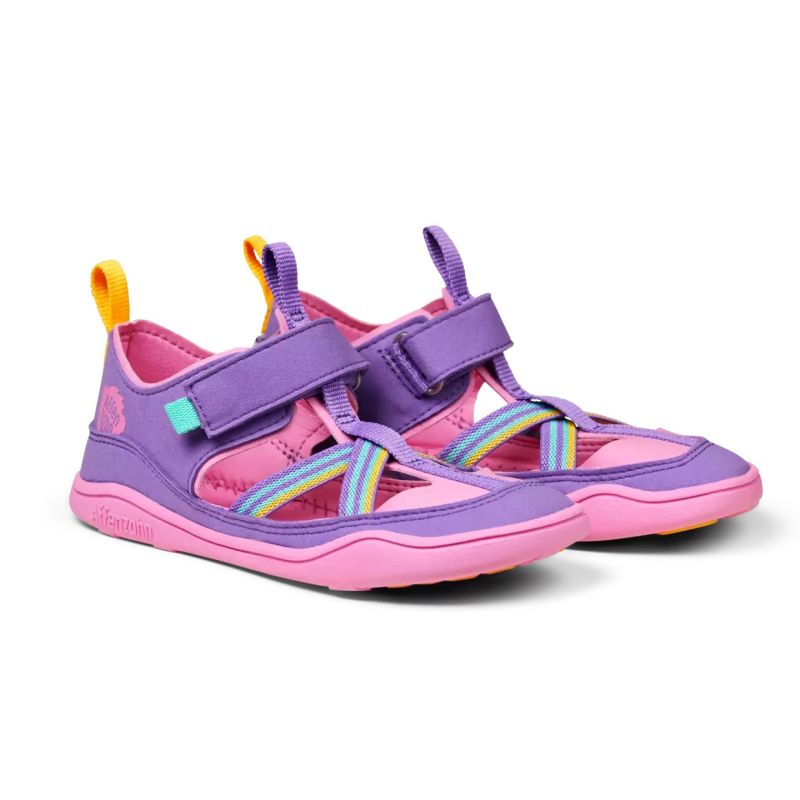
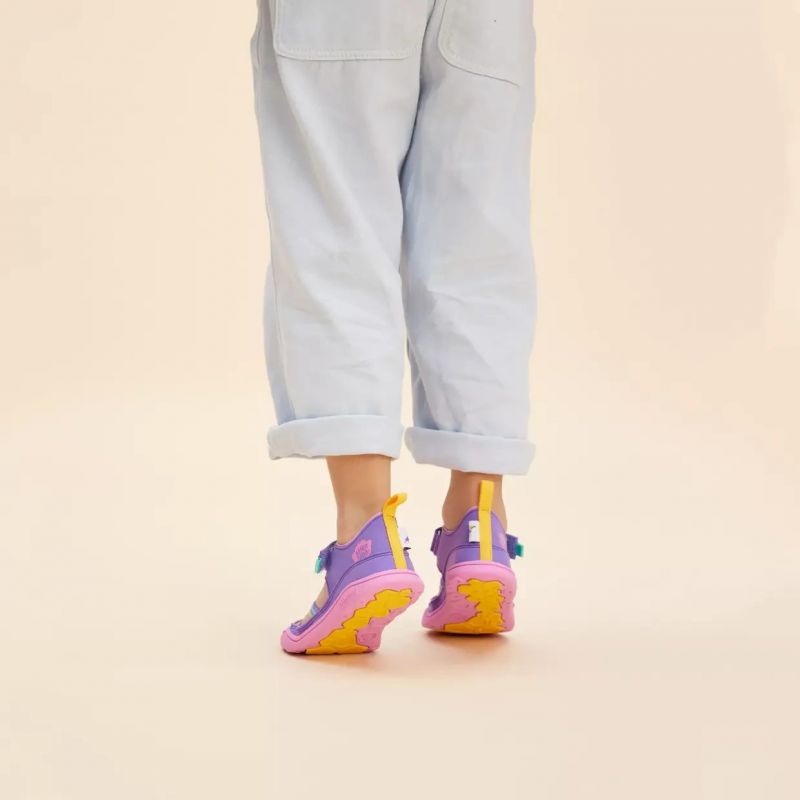
If you're new to barefoot shoes for kids, Brittany's five quick tips for starting with barefoot shoes covers the basics of transitioning. And our kids' barefoot shoes collection has insole lengths listed for every product, so you can match your child's measurement directly.
Getting it right
The process is simple. You need a wall, a piece of paper, a pen, and a ruler. Stand on the paper with your heel against the wall, mark the tip of your longest toe, and measure from the wall to that mark. Do it for both feet, in the afternoon, with socks on if you'll wear them.

Then add your growing room (0.8 to 1.5cm for kids) or comfort room (1.0 to 1.5cm for adults) to your foot length. That gives you your target insole length. Match it to the insole lengths listed on our product pages, and you've got your size.
It takes about two minutes per foot. Our step-by-step measuring guide walks through the whole process with diagrams, including an alternative method if you don't have a wall to use, and a section on measuring width for wide feet.
Frequently asked questions about measuring your feet
How often should I measure my feet?
Adults should remeasure whenever they buy new shoes, or at least once a year, as feet can change shape with age, pregnancy, weight changes, or injury. Children's feet grow in spurts, so you should remeasure every 2 to 3 months to ensure they haven't outgrown their shoes.
Do I measure both feet or just one?
Always measure both feet. It's completely normal for one foot to be slightly larger than the other. Size your shoes to the larger foot. The smaller foot will be comfortable with a touch of extra room.
What time of day should I measure my feet?
Measure in the late afternoon or early evening. Your feet are smallest in the morning and spread throughout the day as they bear your body weight. Measuring when your feet are at their largest ensures your shoes won't feel tight by the end of the day.
How much room should I have in barefoot shoes?
Adults need 1.0cm to 1.5cm of comfort room between the longest toe and the end of the insole. Children need 0.8cm to 1.5cm of growing room to accommodate foot growth between measurements. This space allows toes to splay naturally and the foot to elongate under body weight.
Should I measure my feet with socks on?
Yes, if you plan to wear socks with your shoes. A thick walking sock can add a few millimetres, which can make the difference between a perfect fit and a tight one. This is especially important for children's school shoes, which are often worn with thicker socks.
Why is my barefoot shoe size different from my normal shoe size?
Barefoot shoe sizing is based on actual foot measurements matched to insole length, not on conventional size labels. Conventional brands use inconsistent sizing with no universal standard, and many use vanity sizing. When you switch to barefoot shoes, you match your measured foot length plus comfort room to the published insole length for each size.
Can shoes that are too big cause problems?
Yes. Shoes that are too big cause the foot to slide around, creating friction and blisters. Toes claw to grip the sole for stability, which can weaken foot muscles and lead to hammertoes. Oversized shoes also alter your gait, potentially causing knee, hip, and lower back pain. For children, too much growing room is a trip hazard.
Stop guessing, start measuring
If there's one thing I want you to take away from this, it's that your shoe size is not a fixed identity. It's a measurement. And measurements change. The size you wore ten years ago may not be the size your feet need today.
Once you know your actual foot length, shopping for barefoot shoes becomes straightforward. You're matching numbers, not guessing. And the fit is noticeably better, because you're working with real data instead of a label on a box.
Browse our full range of barefoot shoes for men, women, and kids. Every product page lists the insole length for each size, so you can match your measurement directly. And if you want the full story of why we started Barefoot Brit Shop, you can read that here.
Your feet carry you everywhere. The least you can do is measure them properly.
Leave a comment