



If you've always struggled to find shoes that fit comfortably, there's a good chance you've spent a fair amount of time blaming your feet.
Perhaps you've been told that you have "wide feet", or you've noticed that you need to buy a size larger than you'd expect just to get enough room across your toes. Maybe you've found a particular brand that works reasonably well and, once you've discovered it, you've stuck with it because you know that trying something new usually ends with sore toes, rubbing or shoes that simply don't feel right.
And if you've ever found a pair of shoes you absolutely love, only to discover that they pinch across the front of your foot, you'll probably know the little conversation that happens in your head: I'll wear them in. They'll probably soften up. Perhaps I just need the next size.
We've all become surprisingly good at making excuses for uncomfortable shoes.
But what if the problem isn't actually that your feet are too wide?
What if we've simply become so accustomed to shoes being shaped in a particular way that we've forgotten what a shoe is supposed to do in the first place?

We've become used to shoes that don't really resemble our feet
Take a look at your bare feet. Stand naturally and look down at the shape of them. Your toes spread across the floor, your big toe generally points forwards, and the widest part of your foot is towards the front.
Now look at the shoes you probably have sitting by your front door.
There is a good chance that the shape is quite different.
Women's shoes have traditionally been designed with a tapered silhouette. Even shoes that aren't particularly "pointy" often narrow towards the toes, because a slimmer shape has traditionally been associated with elegance and femininity.
From a fashion perspective, it makes sense. From a foot-shaped perspective, perhaps not so much.
This is one of the reasons that women with wider feet can find conventional footwear so frustrating. The shoe may be perfectly wide enough around the middle, but as it approaches the toes it becomes narrower and narrower. You can end up with plenty of room in one part of the shoe while your toes are being asked to squeeze into a much smaller space at the front.
And that is where the phrase wide fit shoes can become a little misleading.
What does "wide fit" actually mean?
When we hear "wide fit", most of us naturally assume that the shoe has been designed for a wider foot. But there is a difference between making a shoe wider and making a shoe that actually follows the shape of a wider foot.
A conventional wide-fit shoe may simply offer additional width through the midfoot, while still having a relatively narrow or tapered toe box. For someone whose main problem is that their toes need more room, that isn't necessarily going to solve the problem.
Your feet don't just need more room everywhere. They need room in the places where your foot is naturally wider.
This is particularly important around the toes. A healthy, natural foot isn't shaped like the front of many conventional shoes. The toes are not supposed to converge into a neat little point; they spread out, with each toe having its own space.
Once you start looking at shoes in this way, it becomes much easier to understand why some "wide" shoes still don't feel wide enough.

"I've always had wide feet"
This is something we hear regularly, and perhaps you've said it yourself.
"I've always had wide feet."
There is absolutely nothing wrong with having wide feet. Feet come in an enormous variety of shapes, and some people naturally have a broader forefoot, a narrower heel, a higher instep or simply more volume through the whole foot. There isn't one particular foot shape that everyone is supposed to have.
The difficulty comes when the footwear available to us is based around a relatively narrow idea of what a foot should look like.
It can make you feel as though your feet are somehow unusual when, in reality, they may simply be wider than the shoes you've been wearing.
It's a subtle difference, but it's quite an important one.
Instead of asking, "Why are my feet too wide for these shoes?", it can be helpful to turn the question around and ask, "Why are these shoes too narrow for my feet?"
That change in perspective is one of the things that draws many people towards barefoot footwear.
Why the shape of the toe box matters
One of the defining features of barefoot shoes is their wider, more foot-shaped toe box. Rather than narrowing towards the front, the shoe is designed to give the toes more room to sit in a position that is closer to their natural shape.
For someone who has spent years squeezing their feet into conventional shoes, the difference can feel quite remarkable.
It's not necessarily about having a shoe that feels enormous. In fact, a good barefoot shoe shouldn't feel like your foot is swimming around inside it. The aim is to have enough space where you need it, while still having a secure fit around the heel and midfoot.
This is also why simply going up a size isn't always the answer when your shoes feel too narrow.
Imagine your foot needs another few millimetres of width across the toes. Buying a longer shoe doesn't actually make your foot wider; it just gives you more shoe in front of your toes. You can then end up with a shoe that is too long, while still feeling restrictive across the part of your foot that needed the extra space in the first place.
It sounds obvious when you put it like that, but it's something many of us have done for years without really thinking about it.

The problem with women's footwear
There is another reason this conversation matters, and that's the history of women's footwear.
For a very long time, women's shoes have been designed around how we want our feet to look rather than how our feet actually are. Pointed toes, narrow silhouettes and elevated heels have all played a role in creating the idea that a smaller, slimmer-looking foot is somehow more attractive.
Of course, there's nothing wrong with enjoying beautiful shoes. We don't think women should have to choose between looking good and feeling comfortable, and there is certainly nothing wrong with wearing a particular style simply because you love it.
The problem is when the only way to achieve that look is to make your feet conform to a shape that doesn't suit them.
Research has also given us reason to pay attention to this. Studies have found associations between narrower footwear and conditions such as hallux valgus, commonly known as a bunion, while other research has demonstrated that different toe-box shapes can affect pressure around the forefoot.
That doesn't mean we can say that wearing a particular pair of shoes will cause a bunion, or that barefoot shoes will cure one. Foot health is much more complicated than that, and genetics, foot structure, activity and many other factors can all play a part.
What it does tell us is that the shape and fit of our footwear are worth considering.
Is this where barefoot shoes come in?
For many women, yes.
Barefoot shoes aren't simply conventional shoes with a wider toe box, although the additional space at the front is certainly one of their most noticeable features. They generally combine a foot-shaped toe box with a flat, zero-drop sole and a flexible construction, allowing the foot to move more naturally within the shoe.
And barefoot footwear has changed enormously over the last few years.
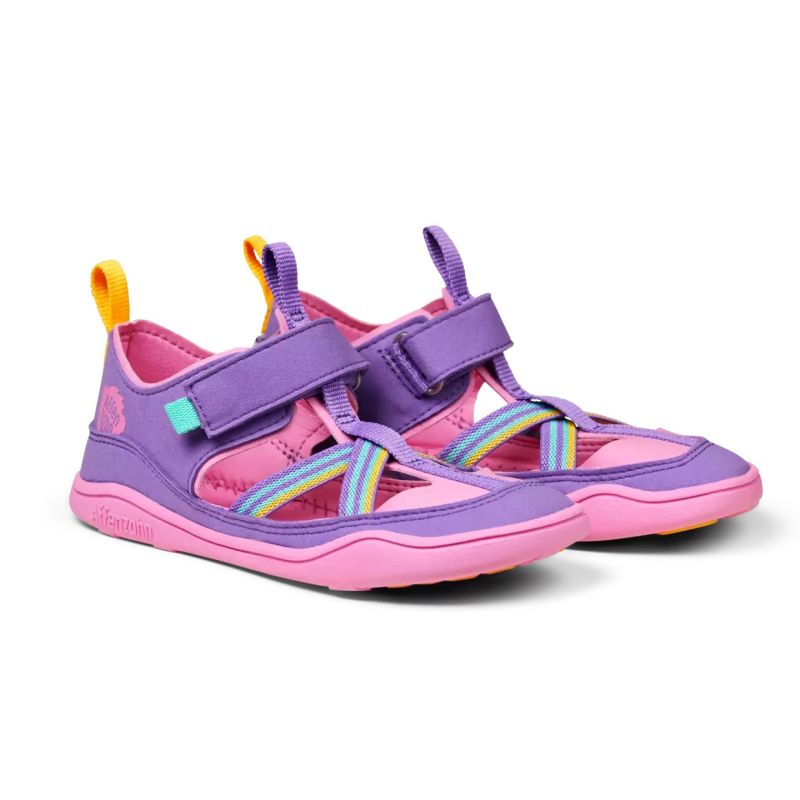
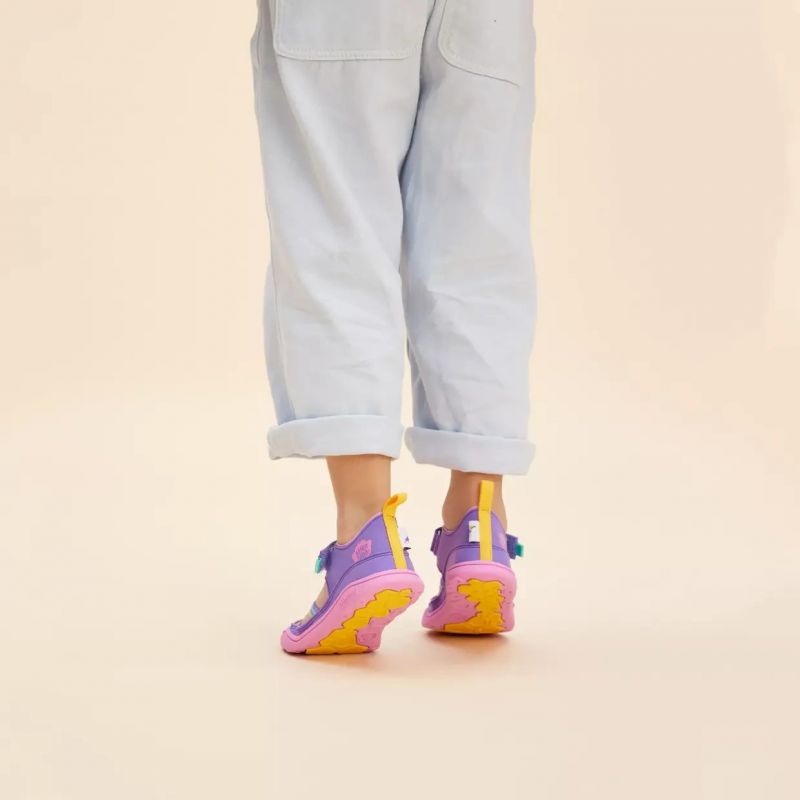
If you have ever looked at barefoot shoes and thought they all looked a little too sporty or unusual for your wardrobe, it's worth looking again. There are now beautifully designed sandals, boots, trainers, ballet flats, Mary Janes, loafers and smart shoes, as well as the more traditional casual styles.
Some are deliberately minimalist, while others look surprisingly similar to conventional footwear.
That means having wide feet no longer has to mean choosing between a shoe that fits and a shoe that you actually want to wear.

But not every barefoot shoe is right for every wide foot
This is an important point, because "barefoot" doesn't automatically mean "perfect for wide feet".
Barefoot brands use different shapes and lasts, so one brand may suit your feet beautifully while another may feel completely wrong. You might have a very wide forefoot but a relatively narrow heel, for example, or you might need additional depth as well as width because you have a higher instep.
This is why we always encourage people to think about the shape of their whole foot, rather than simply looking for the widest shoe available.
A good fit should give your toes enough room to spread while still holding your heel securely. It should have enough length for your longest toe without leaving excessive space at the front, and it should provide enough volume for the height of your foot.
In other words, the goal isn't to find a shoe that is as big as possible.
It's to find a shoe that fits your particular foot.

How to tell whether a shoe is genuinely wide enough
If you've spent years buying "wide fit" shoes without ever feeling completely comfortable, it might be worth looking at your footwear a little differently.
Start by looking at the sole of the shoe. Does the widest part of the shoe actually correspond with the widest part of your foot, or does it begin narrowing while your toes still need more room?
Then look at the toe box. Can you imagine your toes sitting naturally inside it, or does the shape look as though it is encouraging them to bunch together?
It's also worth measuring your feet rather than relying entirely on the size you have always bought. Measure both feet, because they are often slightly different, and remember that length is only one part of finding a good fit. Your foot width, volume and overall shape can be just as important.
This is particularly useful when you're buying barefoot shoes because different brands can fit quite differently.

Perhaps the problem was never your feet
There's something quite liberating about realising that you don't necessarily have "difficult" feet.
Maybe you don't need to keep buying a size too big.
Maybe you don't need to put up with shoes that pinch because you've decided that is simply what happens when you have wide feet.
And maybe you don't need to resign yourself to wearing shoes you don't particularly like just because they're the only ones that don't hurt.
Your feet are not supposed to look like shoes.
They are living, moving parts of your body, and they come in all sorts of shapes. The job of a shoe is to accommodate them.
That's why we think women deserve better options.
At BarefootBrit Shop, we're passionate about finding footwear that gives women more choice, particularly if you've struggled to find comfortable shoes because your feet need a little more room. We stock a range of barefoot brands because we know that there isn't one shape that works for everybody, and we want you to be able to find something that suits both your feet and your personal style.
So the next time you put on a pair of shoes and think, "My feet are just too wide for these," take another look.
It might not be your feet that are the wrong shape.
It might simply be the shoes.
And once you discover what it feels like to give your toes the room they've been asking for all along, you may wonder why we ever accepted anything else.
Your feet deserve better
If you're looking for women's wide fit shoes, wide toe box shoes or comfortable barefoot footwear, start by getting to know your own feet. Measure them, look at their shape and think about where you actually need more room.
From there, you can find footwear that works with your feet rather than asking your feet to work around the footwear.
Because wide feet aren't a problem that needs fixing.
They're simply feet.
And they deserve shoes that fit them.

Leave a comment