


If I'm being completely honest, the school shoe shop used to be my least favourite place on earth.
Every August, I'd drag four children into a shoe shop, bribe them with the promise of a McDonald's afterwards, and spend an hour watching them get measured by a fitter who'd pull out the same stiff, narrow, pointed shoes every single year. The ones with the hard rubber soles and the tapered toe boxes. The ones that are supposed to be "good for their feet" because they've got a leather upper and a chunky heel.
What I didn't realise at the time was that those shoes were actively shaping my kids' feet. Not the other way round.
I'm Lowenna, mum of four and co-owner of Barefoot Brit Shop. I've written before about my journey from barefoot sceptic to convert. How I once thought barefoot shoes looked like clown shoes and how that opinion completely changed once I understood what was actually happening inside a conventional shoe. But this article is specifically about kids. Because when it comes to children's feet, the stakes are higher. Their bones are still growing. And the shoes you put on them now will shape the feet they carry for the rest of their lives.
Are children's feet still growing?
Yes, and not just in length. Children's foot bones are made largely of cartilage, which is soft and malleable. The bones don't fully harden until the late teens, and in some cases not until the early twenties. That means a child's foot will literally mould itself to the shape of the shoe they're wearing.
This isn't my opinion. It's basic developmental biology. But when I first heard it, it was a real lightbulb moment for me. I'd always assumed that kids' feet grew in a fixed shape and you just had to find shoes that fit that shape. The reality is the opposite: the shoe shapes the foot.

Think about that for a second. If you put a child's foot into a shoe with a narrow, pointed toe box, their toes have nowhere to go but inward. Over months and years of wearing that shoe, the toes start to compress. The big toe angles in. The other toes overlap or curl. The foot narrows to match the shoe, because cartilage is soft enough to be pushed.
An adult foot can be damaged by narrow shoes too. I've written about that in detail on our wide fit barefoot shoes page. But an adult's bones are already set. A child's bones are still soft. The damage is deeper, and it happens faster.
What do narrow school shoes do to children's feet?
From what families tell us, I see the same three problems over and over again. Not from one child. From hundreds.
Toes that can't splay. A narrow school shoe squeezes the toes together so they can't fan out the way they're supposed to. Toes are meant to spread wide when they hit the ground. That's how the foot stabilises itself. When toes are pinned together for seven hours a day, five days a week, they lose that ability. I've seen kids whose toes are so used to being squashed that they stay curled even when the shoe comes off.
Arches that can't develop. The arch of the foot isn't a static structure. It's maintained by muscles. When a shoe has a stiff, rigid sole and a built-in arch support, those muscles don't have to work. They get lazy. The foot becomes dependent on the shoe's structure rather than building its own. Kids' feet need to flex and move to develop strong arches. A stiff school shoe prevents that.
Foot muscles that switch off. A thick, cushioned sole does the shock absorption that foot muscles and leg muscles are supposed to do. Over time, those muscles weaken. This is why kids in barefoot-style shoes tend to have stronger feet, better balance, and fewer trips and stumbles. Their feet are actually doing the work they were designed to do.

None of this is meant to make you feel guilty if your child has been wearing conventional school shoes. I was in the exact same boat. My older two wore standard school shoes for years before I knew any better. What matters is what you do once you know.
What does wide fit mean for kids' shoes?
"Wide fit" gets thrown around a lot, and it means different things depending on who's saying it. Some brands use it to mean a slightly wider version of a conventional shoe: a bit more room across the ball of the foot, but still with a tapered toe box. That's not what we're talking about.
True wide fit for kids means three things, and they all matter:
A wide, foot-shaped toe box. The front of the shoe should be wide enough that toes can splay naturally. Not just "not squished", but actively roomy. When you look at a barefoot shoe from above, the toe box should be shaped like a real foot, widest at the toes, not at the ball. This is the single most important feature for growing feet, because it's the one that prevents toe compression.
A flat, zero-drop sole. Most conventional shoes, including kids' school shoes, have a raised heel. Even a small heel lift (5-10mm) shifts a child's posture forward, changes how they walk, and puts extra pressure on the ball of the foot. A zero-drop sole means the heel and the toe are at the same height. The foot sits flat, the way it's designed to. This matters more for kids because their posture is still developing alongside their feet.
A thin, flexible sole. The sole should be thin enough that a child can feel the ground through it, and flexible enough that the shoe can be twisted and bent easily. This isn't about being minimalist for the sake of it. It's about letting the foot muscles work. A thick, stiff sole acts like a splint. It immobilises the foot. A thin, flexible sole lets the foot bend, flex, and feel, which is how the muscles, tendons, and ligaments develop strength.
If you want to see our full range of shoes that meet all three of these criteria, head over to our kids' wide fit barefoot shoes page. It breaks down the options by age, style, and fit.
How much growing room do children's shoes need?
This is the question I get asked most by parents. Kids need growing room; adults need a comfort space. The principle is the same, but kids' feet are still growing, and they grow in spurts, not steadily. A child's foot can jump half a size in a matter of weeks.
For kids, the rule is 1.5cm minimum growing room beyond their raw foot length, with a maximum of 1.8cm. That means you measure the foot, add at least 1.5cm, and match that total to the insole length of the shoe.

Here's how to measure kids' feet properly:
- Measure both feet. One foot is almost always slightly bigger. Size to the larger foot.
- Measure in the late afternoon or evening. Feet swell during the day, so an afternoon measurement gives you the largest foot size.
- Have the child stand up while you measure. The foot spreads and elongates under body weight, so a standing measurement is more accurate than a sitting one.
- Add 1.5 to 1.8cm to the raw foot length to get the target insole length.
We've put together a full step-by-step foot measuring guide that walks you through the whole process with photos. Every product on our site lists the actual insole length, so once you've got your child's measurement, you can match it directly to the shoe.
If your child is new to barefoot shoes, it's also worth reading our 5 quick tips for starting to wear barefoot shoes. The transition is usually quick for kids. Their feet adapt faster than adults', but it's good to know what to expect.
Our pick of kids' wide fit barefoot shoes
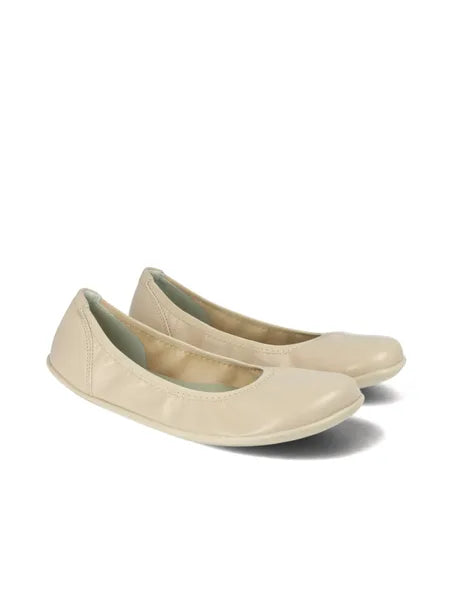
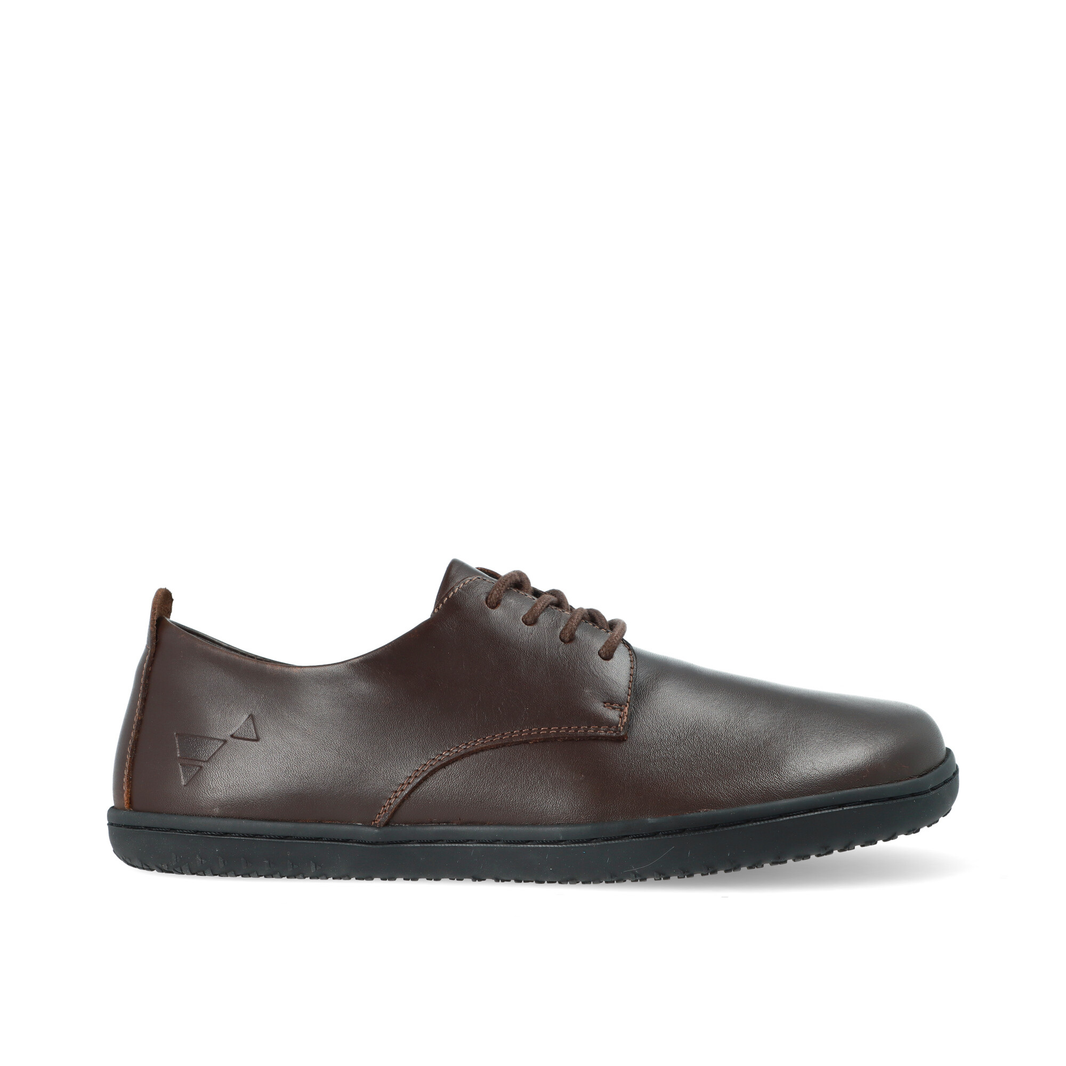
These are some of the most popular shoes from our kids' range. All of them have a wide toe box, a zero-drop sole, and a flexible design, and every listing includes the insole length so you can match it to your child's measurement.


Looking for school shoes specifically? We have a dedicated barefoot school shoes collection with options that meet uniform requirements while still giving growing toes the room they need. For everyday trainers, our kids' barefoot trainers collection has lightweight, flexible options that kids actually want to wear.
Common questions about kids' wide fit shoes
Are barefoot school shoes accepted by schools?
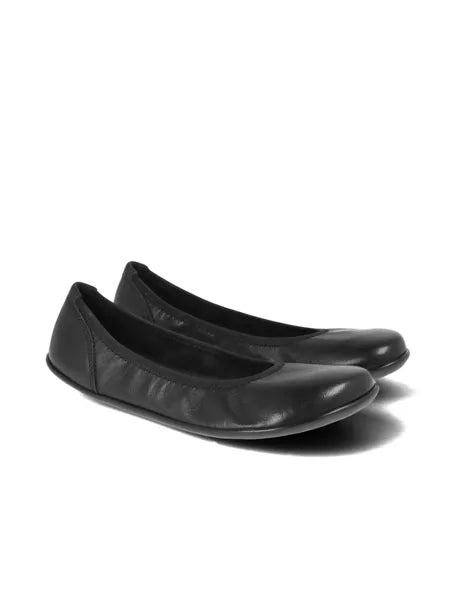
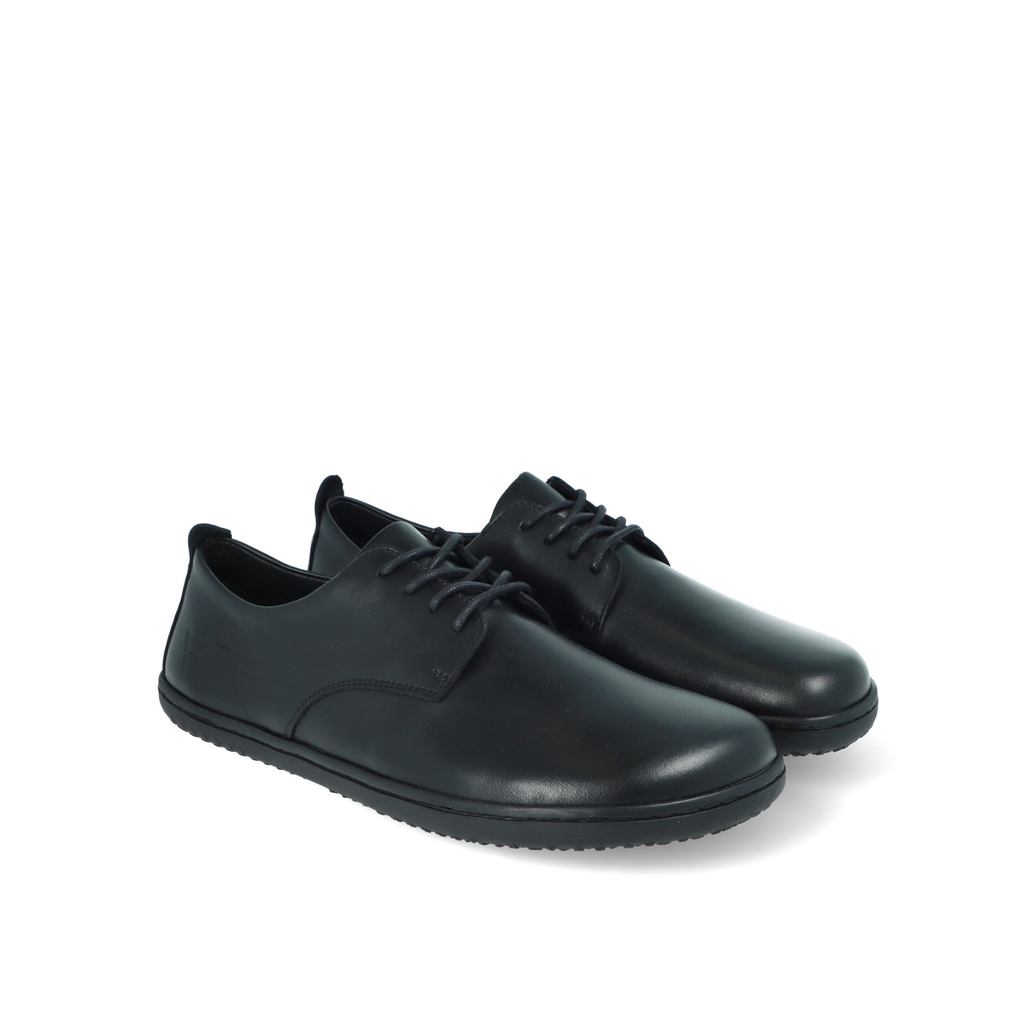
Schools accept barefoot school shoes, especially the all-black leather options. They look like normal school shoes. The difference is in the shape of the toe box and the flexibility of the sole, which isn't visible from the outside. If your school has strict uniform requirements, look for all-black leather styles like the Beda or Baby Bare Febo GO.
How fast do kids' feet grow?
Children's feet grow in spurts, not steadily. Toddlers under two can grow half a size every two to three months. Kids aged two to five typically grow half a size every three to four months. From age six to twelve, expect half a size every four to six months. Check the fit every six to eight weeks, especially for younger children.
Can kids wear barefoot shoes all day?
Yes. Unlike adults, who may need a gradual transition period, most children adapt to barefoot shoes almost immediately. Their feet are still developing, so they haven't yet built up the muscle patterns that adults need to unlearn. If your child has been in stiff, supportive shoes for years, start with a few hours a day and build up, but most kids switch over with no issues at all.
What if my child has wide feet?
Barefoot shoes are inherently wider than conventional shoes because they're shaped like a real foot. If your child has particularly wide feet, barefoot shoes are likely to be the most comfortable option available. Look for styles with soft, flexible uppers that don't restrict the foot.
Kids' feet are still developing. The shoes you choose now will shape them for life.
Shop kids' wide fit barefoot shoesI'll be completely honest. I wish I'd known all of this when my older two were toddlers. I wish someone had told me that the stiff, narrow shoes I was buying every September were slowly reshaping their feet. But I didn't know, and most parents don't. That's why we do what we do.
If you're sitting on the fence, just try a pair. Measure your child's feet, find the right size, and let them wear the shoes for a week. You'll see the difference. Kids don't need to be convinced. They just need shoes that let their feet do what they're supposed to do.
Related reading and useful links:
- Wide fit barefoot shoes for kids: our full kids' range with size guides
- How to measure your feet: step-by-step guide with photos
- A mum of four's honest barefoot journey: my full story from sceptic to convert
- 5 quick tips for starting barefoot shoes: what to expect during the transition
- Barefoot school shoes: uniform-friendly options with wide toe boxes
- Kids' barefoot trainers: lightweight everyday shoes kids love
- All kids' barefoot shoes: browse the full collection
Leave a comment