


I spent the best part of a decade as a groundworker, shoving my feet into narrow steel toe caps for ten hours a day. My toes were pressed together so tightly they had basically forgotten how to move on their own. I had chronic athlete's foot that no cream could keep away. And like most people, I just accepted it as part of the job.
Then I discovered barefoot shoes, and everything changed. Not overnight, and not without some adjustment. But within a few months of switching to a proper wide toe box and zero-drop sole, a decade of fungal issues cleared up. My feet got stronger. The pain I'd normalised for years simply disappeared.
I'm not a podiatrist or a biomechanics researcher. I'm someone who has fitted hundreds of feet over the last few years and seen first-hand what happens when people make the switch. This article is what I've learned. If you want the full side-by-side comparison with a detailed breakdown table, head over to our barefoot vs conventional shoes comparison page. Here, I want to tell you the story behind the data.
What conventional shoes actually do to your feet
Most shoes on the market share four design features that seem helpful but actively work against your foot's natural function.
The narrow toe box. Look at a conventional shoe from above and you'll see it tapers to a point at the front. Your toes are not meant to be in a point. When you squeeze five toes into a triangular space day after day, they start to deform. Bunions, overlapping toes, ingrown toenails: these are not random misfortunes. They are the direct result of footwear that doesn't match the shape of a human foot.

The raised heel. Nearly every mainstream shoe has a heel that sits higher than the forefoot. That drop, even a small one, tilts your entire posture forward. Your Achilles tendon shortens to compensate. Your calf tightens. Over years, this becomes the new normal, and your body forgets what neutral feels like.
The rigid sole. A stiff sole means your foot muscles don't have to work. And when muscles don't work, they weaken. The intrinsic muscles in your feet, the ones that arch your foot and control your toes, essentially go dormant inside a rigid shoe.
The cushioning. Thick padding feels comfortable in the shop. But it cuts off the sensory feedback between your feet and the ground. Each foot has around 7,000 nerve endings, compared to roughly 17,000 in each hand. You would never wrap your hands in thick padding all day and expect them to work properly, yet that's exactly what cushioned soles do to your feet. Those nerve endings tell your brain about surface, texture, and impact. Cushioning muffles that signal. Without it, you land harder, because your body can't feel the ground to adjust.
What makes a shoe "barefoot"
Barefoot shoes aren't a gimmick. They're built around four design principles that let your foot do what it evolved to do.
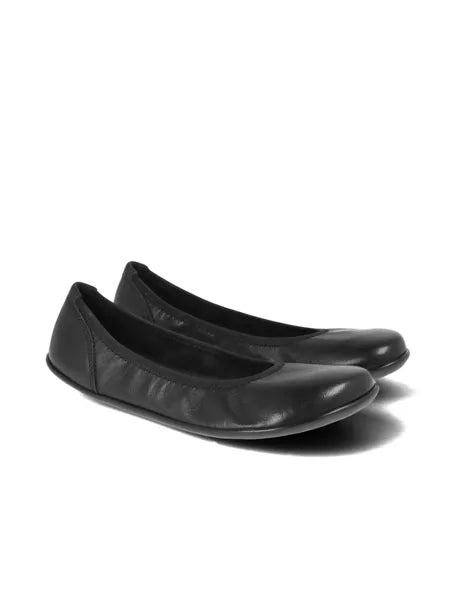
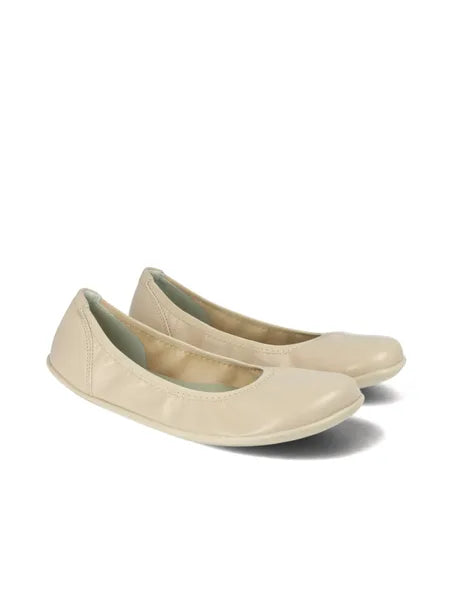
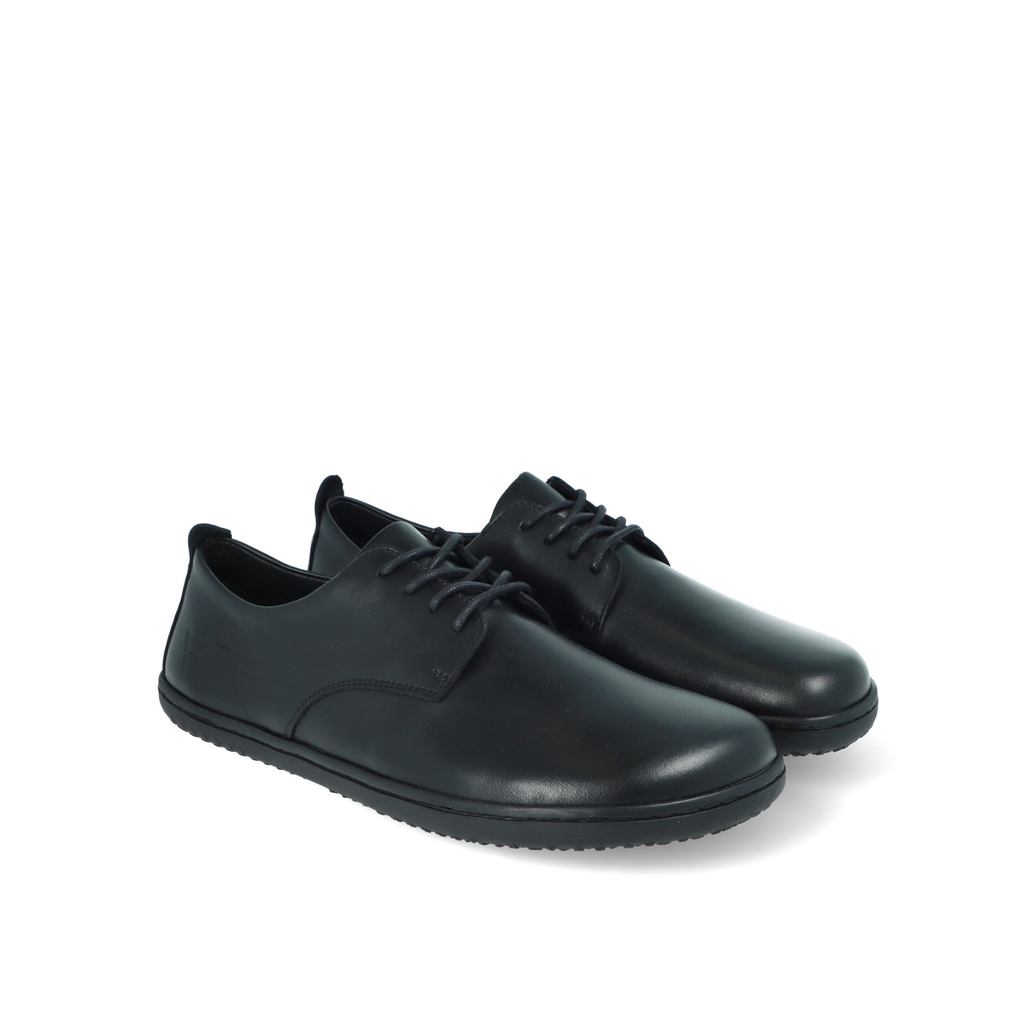
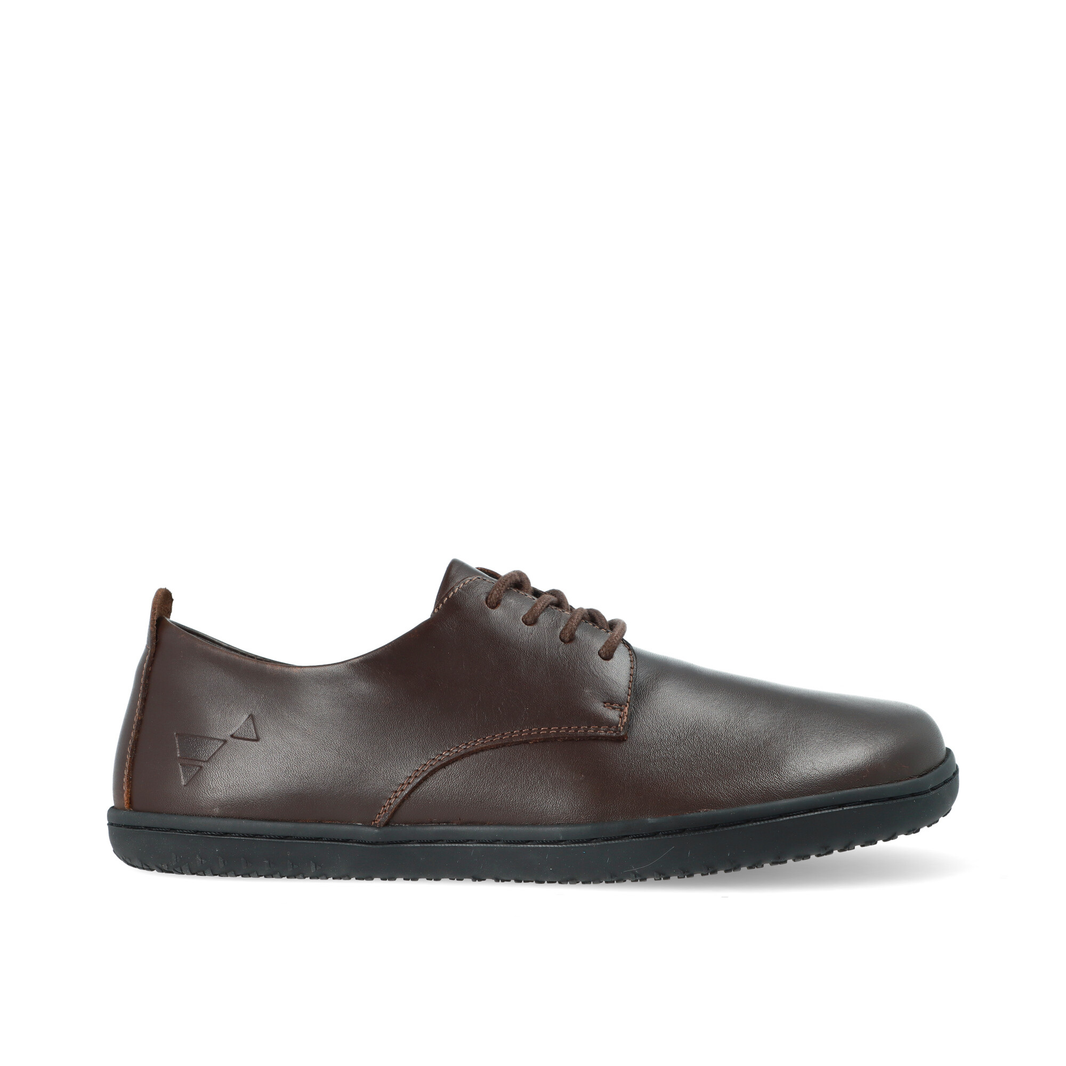
Wide toe box: The front of the shoe matches the actual shape of a human foot. Your toes have room to splay naturally, which is how they absorb impact and maintain balance. If you take a barefoot shoe and trace around it, the outline looks like a foot, not a torpedo.
Zero drop: The heel and forefoot are at the same height. No lift, no tilt. This puts your body in a neutral posture and lets your Achilles tendon function at its natural length. It's the same position you'd be in standing barefoot on the floor.
Thin, flexible sole: The sole is thin enough that you can feel the ground beneath you, and flexible enough that the shoe bends where your foot bends. This wakes up those dormant foot muscles. They have to work again, and over time they get stronger.
No artificial arch support: Barefoot shoes don't prop up your arch with foam or plastic. Your arch is a muscle and ligament structure. It needs to work, not be braced. When you remove the support, the muscles rebuild. This takes time, and it's why transitioning gradually matters.
The real-world difference
On paper, the difference between barefoot and conventional shoes is four design features. In practice, it's how your feet feel at the end of the day.
I remember the first week after I switched. I'd been wearing conventional work boots for years, and my feet felt strange, almost exposed. I could feel the texture of the ground. My toes had space. It took about three weeks for my foot muscles to stop aching in the evenings, and by month two I realised I hadn't thought about my feet once during a shift. They just worked.
That's the difference nobody puts in a spec sheet. Conventional shoes numb your feet. Barefoot shoes wake them up.
For the full feature-by-feature comparison, including a detailed breakdown of toe box width, sole thickness, heel drop, flexibility, and weight, see our complete barefoot vs conventional shoes guide. It includes a side-by-side table and product recommendations for every foot type.
Can you just switch overnight?
Short answer: no. And this is the one thing I wish more people understood before buying their first pair.
Your feet have been in conventional shoes for years, maybe decades. Your Achilles is shortened. Your foot muscles are weak. If you put on barefoot shoes and wear them all day on day one, you'll likely get sore calves, achy arches, and possibly sore knees. Your body needs time to rebuild the strength and length it lost.
Brittany wrote a brilliant piece on this with five practical tips for transitioning to barefoot shoes. And if you want to see what that transition looks like for a whole family, Lowenna's honest account of switching four kids to barefoot shoes is well worth a read. The short version: start with an hour or two a day, walk before you run, and listen to your body. Soreness is normal. Pain means slow down.
It also helps to measure your feet properly before ordering. Barefoot sizing is different from conventional sizing, and getting the right fit makes the transition far smoother. Our foot measuring guide walks you through it step by step.
Who benefits most from barefoot shoes?
Honestly, anyone who wears shoes. But if I had to narrow it down based on what I see in the shop:
- People on their feet all day: tradespeople, nurses, teachers. The combination of toe splay and zero drop reduces fatigue in a way cushioning never can. I wrote more about this in our barefoot work boots and office shoes guide.
- Kids: their feet are still developing. A child in a narrow, rigid shoe is having their foot shape determined by the shoe, not by nature. Lowenna wrote about this from a parent's perspective in her honest family journey with barefoot shoes. Our kids' barefoot shoes collection is one of the largest in the UK for a reason.
- Anyone with foot pain: bunions, plantar fasciitis, ingrown toenails, fungal issues. These are almost always symptoms of footwear, not problems with the foot itself. Give the foot space and it starts to recover.
If you want to see which barefoot shoes suit your specific foot shape and lifestyle, our comparison page breaks it down by foot type with tailored recommendations.
Ready to make the switch?
The best thing you can do is start with one pair and wear them for short periods. Let your feet adjust. Within a few weeks, you'll notice the difference, and within a few months, you won't want to go back.
Browse our full range of barefoot shoes for men, women, and kids. And if you want the full story of why I started Barefoot Brit Shop, you can read that here.
Your feet carry you everywhere. They deserve better than a narrow, rigid, cushioned box.
Leave a comment