



Barefoot Shoes vs Conventional Shoes: What's the Difference?
Most shoes pinch your toes, raise your heels, and stiffen your soles. Barefoot shoes do the opposite: a wide toe box that lets toes splay, a zero-drop sole that keeps you flat, and a flexible build that lets your foot move naturally. Also known as minimalist shoes, they're designed to work with your foot, not against it. Here's how they compare.
Free UK delivery on orders over £130.
Conventional Shoes Are Reshaping Your Feet
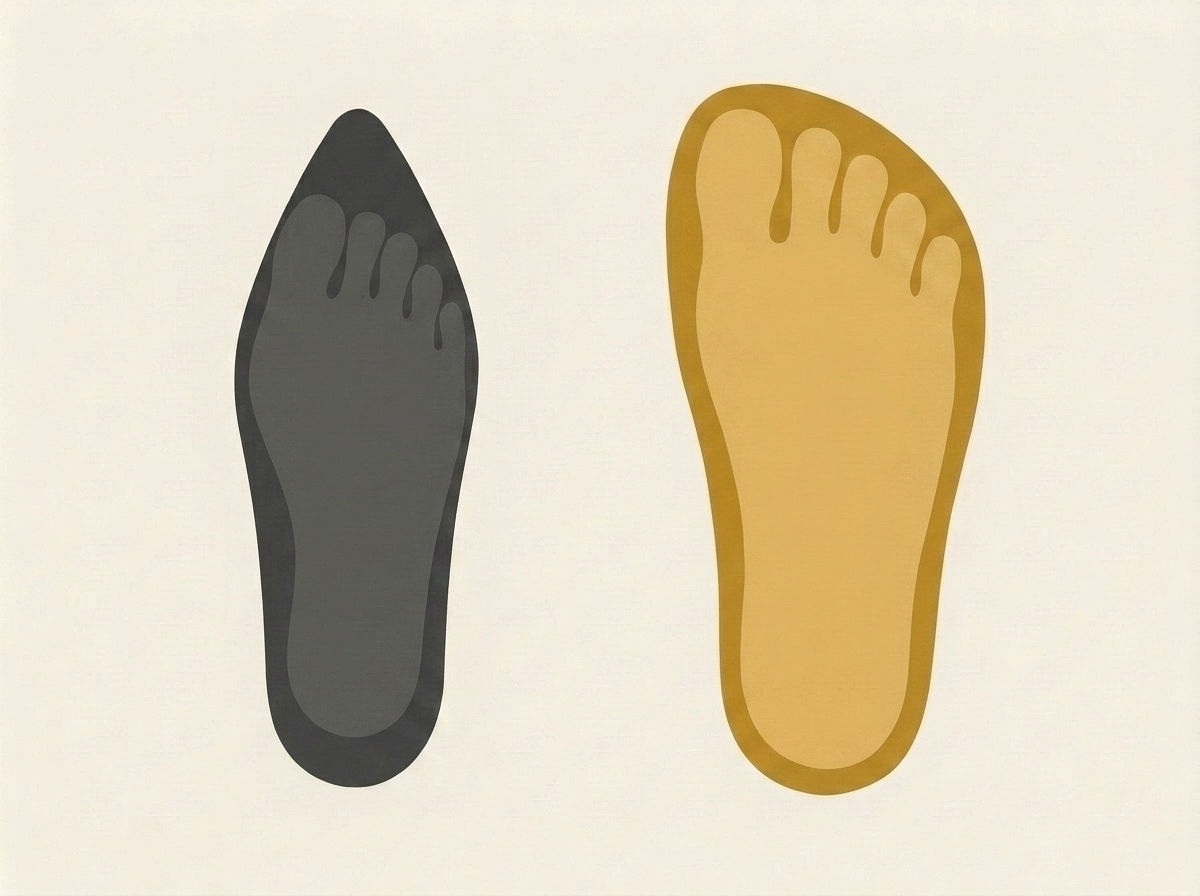
The average shoe has a tapered toe box, a raised heel, and a rigid sole. None of that matches how a human foot is built. Here's what happens when you wear them every day.
Toe Deformation
Narrow toe boxes squeeze your toes together, forcing the big toe inward. Over years of wear this causes bunions, overlapping toes, and misalignment that can take months of barefoot walking to correct.
Weakened Arches
Artificial arch support does the work your foot muscles should be doing. Over time those muscles become lazy and weak, which is why so many people find barefoot shoes uncomfortable at first. The strength has to come back.
Lost Ground Feel
Thick, stiff soles block proprioception, your body's sense of where it is in space. Without ground feedback your balance suffers, your gait shortens, and your ankles and knees take extra impact with every step.
Barefoot shoes are built around the natural shape of a human foot. Wide at the toes, flat from heel to forefoot, and flexible enough to move with you. They don't "fix" your feet. They let your feet do what they were designed to do.
Barefoot Shoes vs Conventional Shoes: Feature by Feature
Seven design differences that change how your feet feel, move, and age over time.
The key difference between barefoot shoes and conventional shoes is that barefoot shoes have a wide foot-shaped toe box, a zero-drop sole with no heel elevation, no artificial arch support, and a thin flexible sole that lets you feel the ground. Conventional shoes have a narrow tapered toe box, a raised heel of 8-14mm, built-in arch support, and a thick rigid sole that blocks sensory feedback.
Toe Box
Toes can splay naturally instead of being squeezed together.
Heel Drop
Weight spreads evenly across the whole foot, not dumped on the ball.
Sole Flexibility
Your foot's 33 joints can bend and flex with every step.
Arch Support
Foot muscles do the work themselves, building strength over time.
Weight
Less weight means less fatigue and a more natural walking gait.
Ground Feel
Your brain gets real-time feedback from the ground for better balance.
Foot Health Impact
Stronger feet mean fewer problems with bunions, balance, and joint pain.
| Feature | Barefoot Shoes | Conventional Shoes | What it means |
|---|---|---|---|
| Toe box | Foot-shaped, wide | Tapered, narrow | Toes can splay naturally instead of being squeezed together. |
| Heel drop | 0mm (zero-drop) | 8-14mm raised heel | Weight spreads evenly across the whole foot, not dumped on the ball. |
| Sole flexibility | Fully flexible | Rigid and stiff | Your foot's 33 joints can bend and flex with every step. |
| Arch support | None (natural strength) | Artificial support | Foot muscles do the work themselves, building strength over time. |
| Weight | Lightweight | Heavy | Less weight means less fatigue and a more natural walking gait. |
| Ground feel | High proprioception | Blocked and numbed | Your brain gets real-time feedback from the ground for better balance. |
| Foot health impact | Strengthens over time | Weakens over time | Stronger feet mean fewer problems with bunions, balance, and joint pain. |
Why These Differences Matter
I spent years on building sites in standard work boots. Stiff soles, raised heels, narrow toe boxes. My feet ached every evening and I just accepted it as part of the job. It wasn't until I found barefoot shoes that I realised the pain wasn't from the work. It was from the boots.
Natural foot shape
Your toes aren't meant to point inward. A foot-shaped toe box lets them splay wide, the way they do when you walk barefoot on sand. That splay is what gives you balance, stability, and shock absorption.
Natural posture
A raised heel tilts your whole skeleton forward. Your body compensates by arching your lower back, which ripples up to your knees, hips, and shoulders. Zero-drop puts you back where you're meant to be: flat and stacked.
Natural movement
A flexible sole lets your foot bend, twist, and feel the ground. That feedback, called proprioception, is how your brain keeps you balanced. Block it with a thick sole and your body has to guess, which leads to stumbles and twisted ankles.
7,000
nerve endings in each foot
Your hands have around 17,000 each, and you'd never wrap them in thick padding all day and expect them to work properly, yet that's exactly what conventional shoes do to your feet. Your soles are packed with sensors designed to read the ground beneath you and feed that information straight to your brain. It's how you navigate uneven terrain, stay balanced, and react before you even realise you need to. Thick, cushioned soles block that signal. Barefoot shoes keep it open.
We built Barefoot Brit Shop because we live this. We're the UK's largest barefoot community, and every shoe we stock is one we'd wear ourselves. If you're not sure where to start, measure your feet first, then read about my journey from aching feet to barefoot convert, or grab our 5 quick tips for starting out.
Find Your Barefoot Shoes
Whatever you need them for, there's a barefoot shoe built for it.
For Everyday Wear
Trainers, sandals, and everyday sneakers that look normal but feel completely different. Perfect for walking the dog, popping to the shops, or anything in between.
For Kids & School
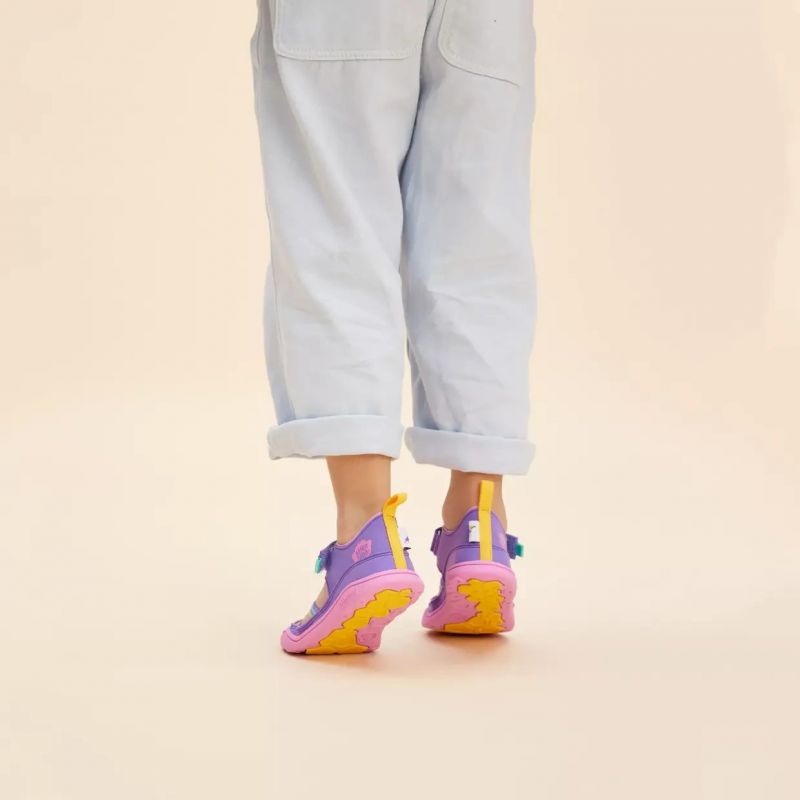
Kids' feet are still developing, so a wide toe box and flexible sole matter most. Our school shoes pass dress-code rules while letting little feet grow naturally.
For Work & Safety
Steel-toe barefoot safety boots that meet workplace standards without the stiffness. Built for people on their feet all day who refuse to sacrifice foot health.
For Wide Feet
If you've spent years in E or EE fittings with no luck, barefoot shoes are the widest fitting footwear you can buy. The toe box is shaped like an actual foot.
Shop Barefoot Shoes
A selection from our women's, men's, and kids' collections. Every pair is stocked and shipped from the UK.

JOSEF SEIBEL Wynona 14


JOSEF SEIBEL Wallace 07


Merrell Vapor Glove 6 LTR - Brown Teens

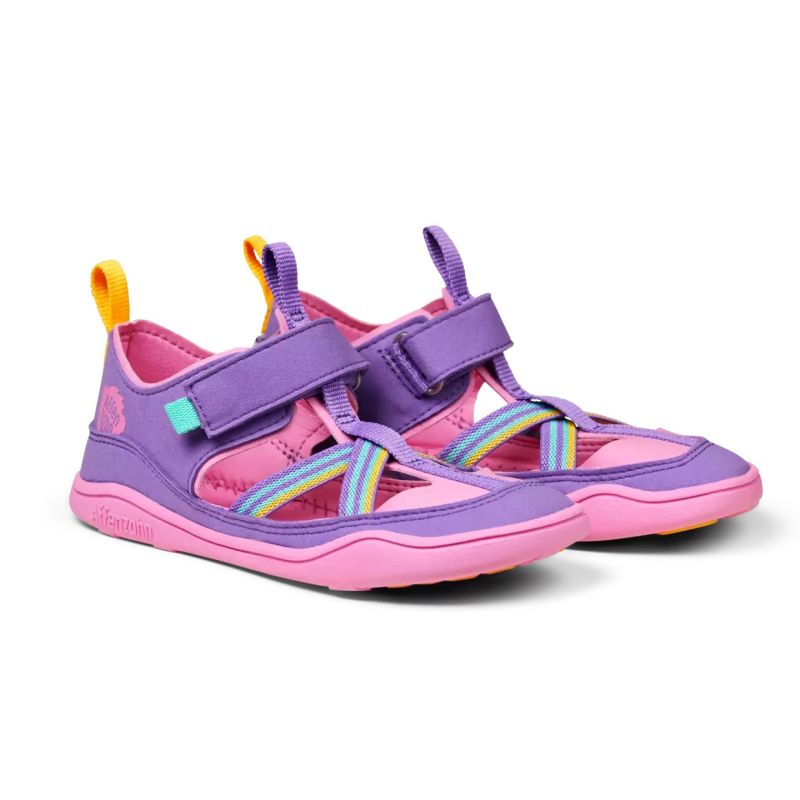
Affenzahn Breezy Vegan Sandals - Toucan Kids
Not Sure Where to Start?
Complete the Shoe Match Assessment and we'll match you with the perfect barefoot shoes for your feet. Answer a few questions about your foot width, size, and preferences, and get personalised recommendations from our curated range.
Take the AssessmentPrefer to browse first? You can explore our curated barefoot shoe collection for women, men, and kids.
Frequently Asked Questions
What are barefoot shoes? +
Barefoot shoes are footwear designed to let your foot move as naturally as possible. They have a wide, foot-shaped toe box that lets toes splay, a zero-drop sole that keeps your heel and forefoot at the same height, no artificial arch support, and a thin, flexible sole that lets you feel the ground. The result is a shoe that works with your foot, not against it.
Are barefoot shoes good for wide feet? +
Yes. Barefoot shoes are the widest fitting footwear available because the toe box is shaped like an actual human foot, not a tapered point. If you struggle with E, EE, or wider fittings in standard shoes, barefoot shoes give you room where you need it. See our wide fit barefoot shoes guide for more.
How long does it take to transition to barefoot shoes? +
It depends on how long you've worn conventional shoes. Most people need two to four weeks of gradual wear, starting with an hour or two a day and building up. Your foot muscles need time to rebuild strength after years of artificial support. Take it slow and don't push through soreness. Read our 5 quick tips for starting out for a step-by-step approach.
Can kids wear barefoot shoes? +
Absolutely. Kids' feet are still developing, so a wide toe box and flexible sole are even more important. Barefoot shoes let children's feet grow naturally without the constriction of stiff, narrow school shoes. We stock a full range of kids' barefoot shoes including school shoes that meet uniform requirements.
Do barefoot shoes have arch support? +
No. Barefoot shoes deliberately remove artificial arch support so your foot muscles do the work themselves. It can feel unusual at first if you're used to supported shoes, but over time your arches strengthen naturally. If you have a specific medical condition, check with a podiatrist before transitioning.
Are barefoot shoes suitable for work? +
Yes. We stock barefoot office shoes that look smart enough for the workplace, and BAAK safety boots that meet workplace safety standards while keeping a wide toe box and flexible sole. Read our guide to barefoot work boots and office shoes for the full range.
What is zero drop and why does it matter? +
Zero drop means the heel and the forefoot are at exactly the same height. Conventional shoes raise the heel by 8 to 14mm, which tilts your posture forward and puts extra pressure on the ball of your foot. Zero drop restores your natural standing angle, distributing weight evenly and reducing strain on your knees, hips, and lower back.
Why are barefoot shoe soles so thin? +
Each foot has around 7,000 nerve endings in the sole. For comparison, your hands have around 17,000 each, and you'd never wrap them in thick padding all day. That's why a tiny piece of grit in your shoe feels overwhelming, despite being barely visible. Your soles are supposed to read the ground and feed that information to your brain in real time. A thick, cushioned sole blocks that signal, so your body has to guess what's underfoot. A thin barefoot sole lets those 7,000 sensors do their job, giving you the feedback you need to move with confidence.
How do my feet help me balance? +
Your feet are your body's built-in navigation system. Every step sends a constant stream of sensory data to your brain about surface texture, pressure distribution, and joint position. This is called proprioception, and it's how you stay balanced on uneven ground without looking down. Thick, rigid soles mute that signal, which is why people in conventional shoes are more prone to stumbles and twisted ankles. Barefoot shoes keep that feedback loop open, so your brain can make micro-adjustments in milliseconds.