


If you have ever spent an afternoon shopping for shoes only to feel caught between two equally frustrating extremes, you are certainly not alone.
In standard high-street footwear, your toes feel pinched, your pinky toe rubs against the outside edge, and your big toe joint takes the brunt of the pressure. Yet the moment you reach for a designated "wide fit" shoe or try sizing up, a different problem begins: your heel slips out of the back with every stride, your foot slides forward, and you find yourself gripping with your toes just to keep the shoe on.
This is the classic dilemma of having a wide forefoot paired with a narrow heel.
At BarefootBrit Shop, this is one of the most common fit questions we answer. The trouble is not your feet, and it is not a lack of options: it is that standard shoe sizing assumes every foot scales up like a symmetrical rectangle. When you understand your proportions and what to look for in a last, finding comfortable, secure footwear becomes entirely achievable.
What Does a Wide Forefoot + Narrow Heel Mean?
In everyday language, this foot shape is often described as fan-shaped, triangular, V-shaped, or colloquially as "duck feet". To be clear, "duck feet" is purely an informal consumer term sometimes used by shoppers to describe a noticeably wider forefoot relative to the heel; it is not a medical diagnosis or condition, but simply a description of natural foot proportions.
Rather than having equal width from back to front, the foot starts with a neat, relatively slender heel and gradually widens outward across the ball of the foot and the toes. The widest dimension of the foot sits right across the metatarsal heads (the ball of the foot) and through the splayed toes.
A broad forefoot paired with a narrower heel represents natural foot geometry: the heel provides an anchor point, while the forefoot widens to form a stable base for balance and walking.

As a mum of four, looking at babies' and young children's feet has always been a helpful visual reference for shoe fitting. In early childhood, the toes naturally splay outward so that the widest part of the foot is clearly across the toes, while the heel remains comparatively slender. Seeing those proportions in young feet makes it easy to understand why evaluating the actual shape of a shoe last is just as important as checking its numerical size.
How to Tell If You Have This Foot Shape
You do not need specialised medical equipment to recognise this foot type. Here are the most telling real-world signs:
- Visible splay when standing: Looking down at your bare feet while standing with your full weight, your forefoot visibly widens like a fan compared to your ankles and heels.
- The blister pattern: You frequently get blisters or chafing at the back of your heels in shoes that feel wide enough at the front, or calluses along the sides of your big and little toes in shoes that grip your heel.
- Sizing up leaves you swimming: When you buy a half-size or full size larger to relieve toe pinching, your foot slides forward inside the shoe, causing your heel to slip out and your toes to slam into the front anyway.
- Heel slippage in conventional wide fits: High-street "E" or "EE" fittings feel sloppy around your ankles and instep, even if the ball of your foot feels relieved.
The single best way to confirm your proportions is to measure both feet properly. Length alone only tells half the story: measuring both your foot length and your circumference across the ball of the foot reveals whether you have a combination proportion. Follow our step-by-step guide to measuring your feet at home to record your exact length and width in millimetres.
Fit Insight: Always measure standing with your full weight on a flat sheet of paper in the late afternoon or evening, as feet naturally expand during the day.
Why Simply Buying a "Wider Shoe" Fails
When shoes feel tight around the toes, the natural reaction is to look for a "wide fit" or extra-wide shoe. Yet for fan-shaped feet, simply moving into a wider shoe does not always solve the problem.
The core issue is that a wider shoe is not necessarily the same thing as a shoe with the right proportions.
Many conventional width-fitting systems achieve extra width by increasing overall shoe volume throughout the shoe. While this can provide helpful extra room across the ball of the foot, it often introduces excess volume around the instep and heel as well. If you have a wide forefoot paired with a relatively narrow heel, that excess space around the rearfoot can make it difficult for the shoe to hold your heel securely. Your heel may begin to lift, your foot can slide forward under movement, and your toes may end up crowding against the front of the shoe despite the extra width.
In addition, many conventional wide-fitting styles retain a tapered toe box, increasing width across the ball of the foot without necessarily matching the natural fan-shaped spread of human toes.
What fan-shaped feet actually need is not simply a shoe with greater overall volume, but one with the right proportions: appropriate forefoot room that allows toes to splay naturally, combined with a secure, well-fitted midfoot and heel.

What to Look for in Footwear for Fan-Shaped Feet
To end the tug-of-war between pinched toes and slipping heels, look for footwear built with these specific design features:
- Anatomical, Foot-Shaped Toe Box: The front of the shoe must follow the true contour of human toes, with a straight big-toe line (no inward pinch) and generous lateral room for the smaller toes to spread.
- Contoured, Low-to-Medium Volume Heel Cup: A sculpted heel counter or curved heel profile grips the calcaneus (heel bone) neatly without excess dead space on either side.
- Adjustable Lacing Across the Instep: Traditional lace-up closures provide far superior adjustability compared to slip-ons or single straps. Laces allow you to anchor your midfoot firmly against the footbed while leaving the toe area completely relaxed.
- Appropriate Vertical Volume: Make sure the shoe does not have excessive height above the midfoot. If a shoe has a deep volume, using a thin secondary insole or tongue pad can eliminate excess vertical space while keeping forefoot width intact.
- Heel-Lock / Runner's Loop Lacing: If you experience slight heel lift in an otherwise well-fitting pair, use the extra top eyelet found on many trainers to create a "runner's lock". This draws the collar gently around your ankle without tightening the forefoot laces.
Powered by the BarefootBrit Fit System™
Can Barefoot Shoes Help Fan-Shaped Feet?
Barefoot shoes can be particularly suitable for fan-shaped feet because many models are built around an anatomical, foot-shaped toe box that is widest across the toes rather than tapering inward. Because true barefoot shoes also feature a zero-drop sole (where the heel and forefoot sit completely level), your body weight is distributed more naturally across the whole foot rather than being tipped forward into the toes by an elevated heel.
However, barefoot shoes vary significantly between brands and models in heel shape, midfoot fit, and overall interior volume. Some brands use very broad, high-volume lasts that may feel too loose around a slender heel, while others use more contoured European lasts that combine generous toe boxes with a closer rearfoot fit. Choosing the right pair comes down to matching your specific combination of forefoot width, heel proportions, and instep volume to the right brand last.
Best Barefoot Options for Wide Forefoot & Narrow Heel
At BarefootBrit Shop, our team measures the physical interior dimensions of every shoe we stock. Below are our top verified models for shoppers who need generous forefoot width without sacrificing rearfoot security.
| Shoe Model | Forefoot Width | Heel Fit | Instep & Volume | Best For |
|---|---|---|---|---|
| BLUSUN 200W / 600W | Generous Wide | Snug & Contoured | Low to Medium | Everyday trainers & walking; ideal for lower-volume feet with slender heels |
| Angles Linos 2.0 / Calisto | Wide Anatomical | Structured Leather Hold | Low to Medium | Smart-casual & office wear; structured heel counter designed for dependable rearfoot hold |
| Rayve Woodstock / Rio | Broad Splay | Adjustable Lace-to-Toe | Medium | Everyday lifestyle & walking; adaptable midfoot fastening for versatile instep fit |
| PaperKrane Lows | Extra Wide | Padded Collar with Laces | Medium to High | Substantial forefoot width combined with sufficient overall foot volume |

- Forefoot: Wide anatomical toe box allowing natural splay
- Heel: Contoured Portuguese leather heel cup designed to provide a secure fit for slender heels
- Volume: Low-to-medium instep for a close, glove-like fit

- Forefoot: Generous asymmetrical toe box matching toe curves
- Heel: Structured European leather counter designed to provide dependable rearfoot hold
- Volume: Low-to-medium volume, suited for slender feet needing toe room

- Forefoot: Broad toe box with supple upper materials
- Heel: Deep lace-to-toe pattern allowing the midfoot and rearfoot to be cinched comfortably
- Volume: Medium volume with flexible lace adjustment

- Forefoot: Extra-wide toe box for very substantial spreading room
- Heel: Padded collar with firm lace closure
- Volume: Medium-to-high volume; best suited for feet that also have sufficient vertical depth (narrow or low-volume heels may require an additional insole for optimal rearfoot hold)
A Practical Note on Socks: Protecting Your Toe Splay
Even the most generous foot-shaped shoe cannot provide true forefoot comfort if your socks are binding your toes together. Conventional elastane-heavy socks often compress the digits into a tight bundle before you even put your shoes on.
To experience the full benefit of an anatomical toe box, pairing your shoes with anatomical or toe-separated socks can make a noticeable difference:
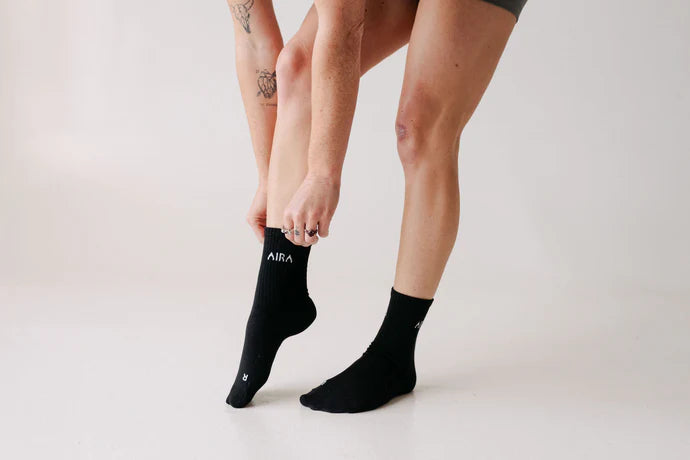
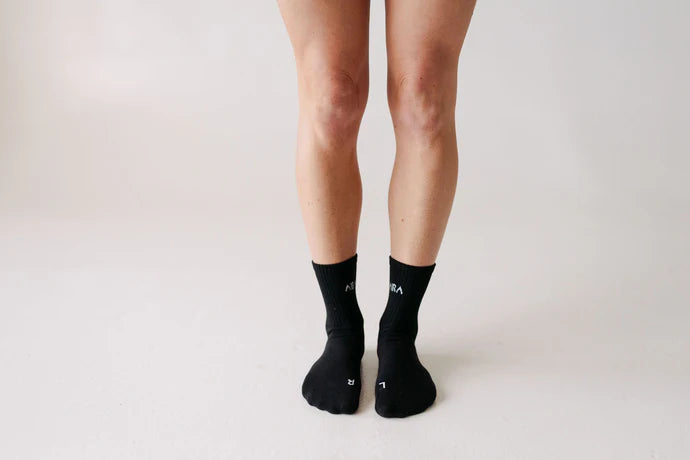
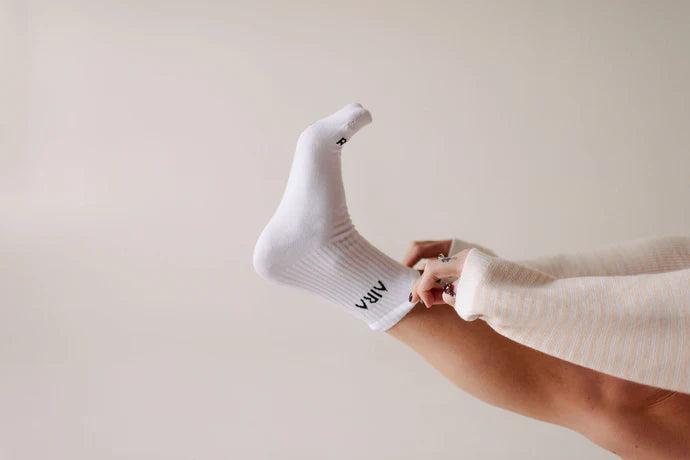
- AIRA Basics Barefoot Crew Socks (£11.00 - £12.00): Shaped with an anatomical wide toe box that allows your toes to splay freely without separate toe sleeves. Designed to wash well without shrinking in the tumble dryer.
- Maro Organic Cotton Crew Toe Socks (£12.00): Individual five-toe sleeves made from soft organic cotton. They eliminate toe-on-toe friction, wick moisture between digits, and allow complete independent toe mobility.
Browse our complete range of barefoot socks to find the ideal match for your everyday shoes.

How to Choose Between Models & Next Steps
When deciding which pair is right for your daily routine, consider these simple rules of thumb:
- For slender heels and everyday trainers: Choose BLUSUN 200W or BLUSUN 600W. Their Portuguese leather construction, contoured heel cup, and low-to-medium instep volume are designed to provide dependable rearfoot hold without crowding the forefoot.
- For smart-casual and office wear with structured hold: Choose Angles Linos 2.0 or the Angles Calisto. They offer a refined European silhouette with a structured leather counter designed to keep the heel seated while giving toes generous room.
- For relaxed lifestyle and adjustable fastening: Choose Rayve Woodstock or Rayve Rio for soft, flexible materials with lace-to-toe adjustment that lets you adjust midfoot tension independently.
- For very broad forefeet with sufficient overall foot volume: Choose PaperKrane Inky Retro Lows or Stonewash Lows. PaperKrane provides the widest available toe box platform, but because their lasts carry more overall vertical volume, shoppers with particularly slender heels or low-volume insteps may find a lower-volume model (or adding a thin insole) provides a closer, more secure rearfoot fit.
If you are still uncertain how your measurements match up across our brands, we have two straightforward tools to help:
First, record your length and width measurements using our step-by-step foot measuring guide. Then, use our tailored Shoe Match Assessment. Our assessment factors in your exact foot length, width, and heel volume to suggest the ideal model from our collection.
Find Footwear Shaped Like Your Feet
Stop compromising between crushed toes and slipping heels. Explore our curated collections designed for natural foot geometry.
Leave a comment