



It is one thing to enjoy a lightweight barefoot trainer on a dry summer afternoon. It is another thing entirely to step out into a damp British November when pavements are slick, grass is sodden and the temperature is hovering near freezing. If your toes have finally started enjoying the space to spread naturally, the thought of cramming them back into a rigid, heavy winter boot feels like an enormous step backwards.
At the same time, heading outside in unlined summer shoes quickly leaves you with numb toes and soaked socks. You want barefoot winter footwear that keeps you warm and dry without losing that natural foot freedom, but finding the right balance can feel surprisingly tricky.
Barefoot winter boots have come a long way in recent years. There are now plenty of designs crafted to protect your feet from biting cold, slush and wet weather while still giving your toes the room to splay and your feet the flexibility to move. The key is knowing what to look for, because a boot that suits a dry city commute will feel completely out of place on a muddy Sunday walk through the woods.
Before you simply reach for the thickest, warmest-looking pair, it is worth thinking about what your feet actually need to handle the cold.

What makes a good barefoot winter boot?
If you initially switched to barefoot footwear because conventional shoes felt cramped, stiff or uncomfortable, winter should not mean compromising on the things you value about barefoot footwear.
A proper barefoot boot still follows the core foundations of natural footwear: a wide, foot-shaped toe box that lets your toes spread flat, a completely flat zero-drop sole from heel to toe, and enough flexibility for your foot muscles to articulate rather than being locked inside a rigid cast.
When winter arrives, however, your footwear has to work much harder. You might need thermal insulation for standing on frozen school playgrounds, a genuine waterproof membrane for wet morning dog walks, or a deeper tread for slick mud and wet leaves. The challenge is finding zero drop winter boots that provide a dependable barrier against the elements without becoming heavy, stiff or tapered at the front.
Finding that balance comes down to matching the design of the boot to your daily routine, your climate, and what you plan to wear underneath.
Are barefoot winter boots actually warm enough?
If your toes tend to go numb the moment the temperature drops, it is completely natural to wonder whether barefoot boots can genuinely keep you warm.
Traditional winter boots often rely on thick, rigid rubber soles to elevate your feet off the frozen ground. In barefoot footwear, the soles are intentionally thinner to maintain sensory feedback and flexibility. If you spend half an hour standing still on frozen paving slabs or watching pitch-side sports in unlined footwear, the cold can quickly conduct upwards through the thin sole.
There is, however, another practical factor to consider: fit and space.
When a conventional winter boot tapers inward at the front, it can leave your toes compressed with nowhere to move. Squeezing your feet into a boot that is too tight also leaves no room for suitable winter socks. In contrast, a boot with a foot-shaped toe box gives your toes space to move naturally as you walk, while leaving sufficient volume for socks that are appropriate for colder weather.
For genuinely cold conditions, look for warm barefoot boots with dedicated winter linings such as natural wool, shearling, or fleece. You can also slip in a thermal or wool-felt insole to block conductive ground chill without sacrificing sole flexibility. Fit is essential here: if a boot fits very closely with thin summer socks, pulling on thick winter socks will leave your toes compressed and uncomfortable. That is why checking both length and internal volume matters before choosing your winter pair.
Are barefoot boots waterproof?
If you have ever stepped outside into a sudden British downpour and felt cold water seeping through your footwear within minutes, you will know that warmth is only half the battle.
Not all barefoot boots are waterproof, and it is a common mistake to assume that every boot designed for winter will automatically keep your feet bone dry. Footwear generally falls into two distinct categories: water-resistant and fully waterproof.
Water-resistant boots are typically made from quality oiled leather, treated suede, or tightly woven textiles. They cope admirably with damp pavements, light showers, and dry cold days, and they offer excellent natural breathability. If your winter consists mainly of urban commuting, school runs, and popping into shops, water-resistant footwear treated with a good natural wax or waterproofing spray is often more than enough.
If your routine involves walking the dog across soaked fields, wading through wet grass, or navigating flooded pavements, you will want fully waterproof barefoot boots. These boots feature an integrated waterproof membrane (such as Froddo-Tex) sealed inside the lining and a gusseted bellows tongue that stops water from entering through the lace eyelets.

For everyday winter weather across the UK, choosing between water-resistant and waterproof barefoot boots UK comes down to how much standing water and wet terrain you encounter on a daily basis. Keep in mind that even the best waterproof membrane requires sensible care, as keeping the outer material clean and conditioned prevents it from becoming waterlogged.
Do barefoot winter boots have enough grip on wet ground?
Wet fallen leaves, greasy mud, frosty paving stones, and slippery manhole covers can turn a familiar morning stroll into an obstacle course.
Traditional winter boots tackle slippery ground by adding massive, rigid lugged soles. While those can provide plenty of traction, they can also make the sole feel much thicker and more rigid than a barefoot shoe.
Barefoot boots take a smarter approach to grip. Because the sole remains flexible, your foot can adapt more easily to changes in the ground beneath you.
When choosing barefoot boots for walking, consider where you will realistically be spending most of your time:
A completely smooth sole might be perfectly suitable for everyday town use, but if you are regularly walking on muddy paths, wet grass, or slippery winter trails, a more pronounced tread can provide useful traction. Conversely, if you spend most of your time on pavements, travelling, and popping into shops, a less aggressive sole may feel lighter, quieter, and more practical underfoot.
The important thing is that useful grip does not have to mean giving up flexibility. A well-designed winter sole can give you the traction you need while still allowing your foot to move and adapt naturally to the ground. The question to ask is not simply which boot has the biggest tread, but how much grip you actually need for where you will be walking.
How much room should you leave in barefoot winter boots?
Sizing winter footwear can catch even experienced barefoot wearers by surprise. You might measure your foot, order your usual size, and then discover that the boot feels uncomfortably snug once you pull on a pair of warm socks.
Your toes should never press against the end of the boot, nor should they feel pinched from the sides. You also need enough vertical depth so the top of your foot is not under constant pressure.
When we help customers find their ideal fit at BarefootBrit Shop, we look beyond the shoe size printed on the box. We look at total foot length, foot width, and overall volume, comparing them against the internal insole measurements we take across our footwear range.
Comfort Room Recommendation: As a general guideline for adults, we recommend allowing around 8 to 12mm of extra room beyond your longest toe. An allowance of 8 to 10mm provides a standard, secure fit, while 10 to 12mm offers a roomier winter feel that easily accommodates thicker socks and thermal insoles. For children, who need additional growing and rolling room, we typically suggest 15 to 18mm of space.
If you are not sure of your current measurements, taking a few minutes to follow our guide on how to measure your feet will give you accurate length and width numbers to work from before you start browsing.
Can you wear barefoot boots with thick socks?
You can certainly wear thick socks with barefoot boots, but only if the boot has been sized with that extra volume in mind.
If you squeeze a thick pair of knitted wool socks into a boot that was fitted for thin trainer socks, you eliminate the toe box space that makes barefoot footwear comfortable. Your toes become compressed, the fabric bunches around the metatarsals, and your feet can end up feeling restricted and cold.
If you live in thick winter socks from October through to March, we recommend measuring your feet while wearing those exact socks, or sizing up to ensure you maintain that crucial 10 to 12mm comfort buffer.
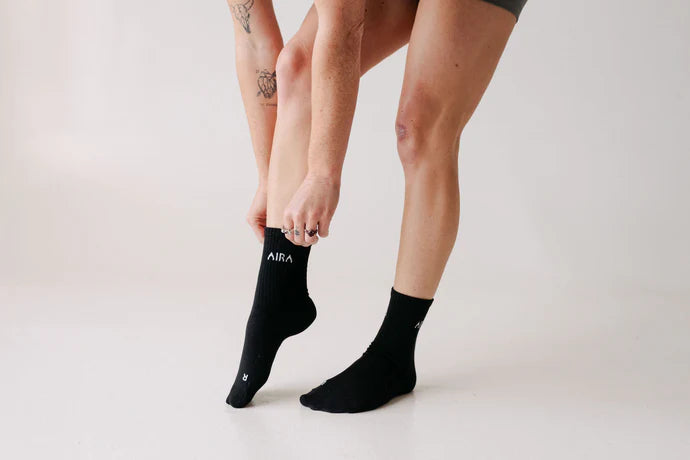
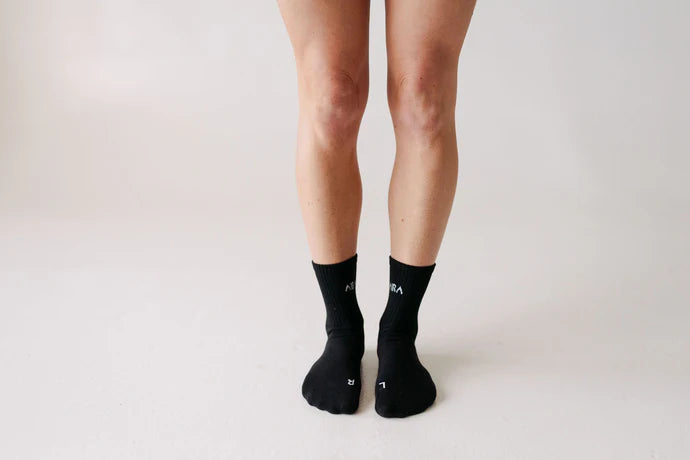
Another practical option for cold weather is pairing your winter boots with anatomical toe socks, such as those in our barefoot socks collection. Because toe socks wrap each toe individually, they keep your feet warm, manage moisture effectively, and prevent skin-on-skin friction without taking up the bulky, restrictive space of conventional heavy socks.
Looking for barefoot boots for wide feet?
If you have wider feet, buying winter boots has probably been a lifelong source of frustration. Most conventional boots taper sharply inward towards the toes, tempting you to buy a size or two larger simply to stop your toes from rubbing. The result can be a boot that is unnecessarily long, while still feeling too tight across the widest part of your foot. Simply adding extra length does not give your toes the width they actually need.
When people search for barefoot boots for wide feet, they are often relieved to discover that barefoot footwear is shaped like an actual human foot. The toe box stays broad and squared off at the front, allowing your big toe to remain straight and your outer toes to rest comfortably.
However, even within the barefoot world, width varies significantly between brands. Some models offer a generous medium-to-wide fit, while others are built for genuinely wide feet UK shoppers often struggle to accommodate anywhere else.
It is also worth remembering that winter boots often have thicker linings, waterproof membranes, and reinforced protective rands around the base, all of which reduce the internal width slightly compared to an unlined summer shoe. Always check the exact internal width measurement of the boot against your foot width rather than relying on a generic wide fit label.
What if you have a wide forefoot and a narrow heel?
Finding winter boots can feel particularly frustrating if your feet are wider across the toes but relatively narrow through the heel.
With traditional footwear, you often face an uncomfortable compromise: if a boot has enough room across the forefoot, your heel lifts and slips with every stride, leading to rubbing and blisters. If you size down to secure your heel, your toes are immediately squashed against the front. In winter boots, heel slip can become even more noticeable because the sturdier uppers and outsoles do not flex as readily as a lightweight summer shoe.
When choosing winter boots for this foot shape, look for styles that provide generous room across the toe box while offering secure adjustability around the instep and ankle. Lace-up boots are particularly effective here, as they allow you to anchor your heel firmly into the back of the boot without having to compromise on toe room.
Understanding how your heel and forefoot work together is one of the reasons we developed the BarefootBrit Fit System at BarefootBrit Shop, helping you look beyond a basic width label to find winter boots that match the actual shape of your foot.
Chelsea boots, ankle boots or taller winter boots?
Once you understand your fit requirements, you can think about the style of boot that best matches your daily lifestyle. Different heights and fastenings offer distinct advantages for British winter weather.
Barefoot Chelsea boots
Chelsea boots are an effortless, timeless choice for everyday smart-casual wear. With their elasticated side gussets and pull-tabs, barefoot Chelsea boots slip on easily and look great paired with jeans, cords, or office trousers.

Because they lack laces, Chelsea boots rely on the elastic gusset and your instep to keep them in place. They work brilliantly for medium-volume feet and everyday city wear, but if you have a very low instep or a very narrow heel, you may find a lace-up boot provides better adjustability for long countryside walks.
Barefoot ankle boots
Lace-up barefoot ankle boots are the most versatile workhorses of the winter wardrobe. By adjusting the lacing tension, you can tailor the fit across your instep and accommodate different sock weights as the temperature fluctuates.
Ankle boots provide gentle protection and warmth around the joint while keeping splashes and debris out. They transition seamlessly from the school run and everyday errands to weekend trail walking, making them a staple in both our women's barefoot boots and men's barefoot boots ranges.
Taller winter boots
When temperatures plummet, or when your walks take you through tall wet grass, muddy bridleways, and slushy puddles, taller mid-calf boots offer unmatched protection.
Taller boots create a continuous barrier of warmth up the lower leg and stop rain or debris from getting inside the collar. They are an exceptional choice for cold-weather dog walking and outdoor work. They are also especially practical as kids' barefoot boots, keeping little feet dry, warm, and ready for winter puddle jumping.
Leather or vegan barefoot winter boots?
Material is another practical consideration, but there is no single option that is automatically right for every person or every winter condition. Different materials and constructions offer different levels of durability, weather resistance, breathability and maintenance requirements.
Leather barefoot boots
Quality smooth leather, oiled leather, and nubuck remain popular choices for winter boots. Leather is naturally durable and can offer good weather resistance, particularly when properly cared for and treated with an appropriate wax, balm, or waterproofing spray. Over time, well-cared-for leather can also soften and adapt comfortably to your foot.
However, leather does require regular maintenance. Salt, road grit, and wet mud can dry out the material if left uncleaned, so if you choose leather boots, you will need to be prepared to clean and condition them periodically to keep the upper supple and weather-resistant.
Vegan barefoot winter boots
Vegan and synthetic barefoot winter boots use a range of materials, from treated microfibres and technical textiles to synthetic uppers paired with waterproof membranes. Depending on the construction, some vegan styles can be very practical for wet, muddy conditions, offering dependable weather protection alongside straightforward care routines.
Rather than assuming all vegan boots behave in the same way, check the specifications of the individual model. Look at whether the upper is water-resistant or fully waterproof, how breathable the lining is, and what the manufacturer recommends for cleaning.
Ultimately, the best choice depends on your personal preferences, how you plan to care for your footwear, and the conditions you expect to encounter most often.
What to check before choosing your barefoot winter boots
When comparing barefoot waterproof boots, it is easy to get swayed by how a boot looks in a photograph. Before making your choice, run through this practical checklist:
- Toe box shape: Does the toe box mimic the natural shape of a human foot, allowing your big toe to sit straight without tapering inwards?
- Zero-drop sole: If you are specifically looking for zero-drop footwear, check that the heel and forefoot sit at the same level.
- Sole flexibility and tread: Does the sole bend naturally with your foot while offering a tread pattern suited to your terrain, whether town pavements or muddy paths?
- Weather protection: Do you need fully waterproof protection with a sealed membrane for wet grass and deep mud, or will breathable, water-resistant treated materials suffice?
- Internal volume and socks: Is there enough vertical depth and width to comfortably accommodate your preferred winter socks without squashing your toes?
- Fastening and heel security: Does the fastening allow you to anchor your heel firmly to prevent slipping, especially on uneven winter terrain?
Finding the right barefoot winter boots for your feet
There is no single barefoot winter boot that suits everyone, and that is exactly how it should be.
Your ideal pair depends on where you walk, how much standing water you encounter, whether you feel the cold easily, and the unique proportions of your feet. A sleek barefoot Chelsea boot suited for commuting through town will have very different specifications from an insulated, waterproof ankle boot built for wet winter dog walks.
What does not change is the fundamental benefit of barefoot footwear: giving your feet the room to spread, the flexibility to move, and a level foundation on the ground. Winter weather does not mean you have to surrender those benefits and return to cramped, stiff boots.
At BarefootBrit Shop, we curate a dedicated range of barefoot winter boots for women, men, and children from trusted European barefoot makers. If you want help finding the ideal match for your foot length, width, and volume, explore our barefoot boots collection or try our Shoe Match Assessment for tailored sizing guidance.
Because the best winter boots are not necessarily the heaviest or bulkiest ones on the shelf. They are the ones that keep your feet comfortably warm and dry while letting them move exactly as nature intended.
Ready to find your winter barefoot boots?
Explore our curated winter collection or get personalised sizing guidance from our team.
Leave a comment