



There is a little ritual you probably don't even think about anymore. You get home, you kick off your shoes. Maybe they go by the front door, maybe they get flung into the hallway, or maybe, if you've had a particularly long day, they come off before you've even put the shopping away. And then your feet breathe.
You probably don't think, Thank goodness, my feet are free. You just think, That's better.
Because you've spent years believing that shoes are supposed to feel uncomfortable. That little bit of rubbing at the heel? Normal. Your toes feeling squashed by the end of the day? Normal. Having to take your shoes off under the table because your feet are aching? Normal. Choosing the closest parking space because you don't fancy walking any further in your shoes? Normal.
And that quick trip into Asda somehow becoming an endurance event for your feet? Well, that's just one of those things, isn't it?
Except it doesn't have to be.

You don't know what you're missing until you feel it
Imagine putting your shoes on in the morning and not thinking about your feet again. No adjusting them as you walk, no little pinch across your toes, no heel rubbing, no counting down the hours until you can take them off.
You go to school drop-off. You pop into town. You walk around the supermarket. You take the dog out. You wander around the garden while the kids play. And your shoes simply... disappear.
Not literally, obviously. You just stop noticing them. They're not something you're tolerating anymore, they're something you're wearing. And there is something quite wonderful about that.
Because when you have spent years squeezing your feet into shoes that weren't designed to let them move naturally, comfortable footwear can feel almost revolutionary.
At first, you might even find yourself thinking about your feet more, not less. Oh. My toes can actually move. Why don't my shoes press here anymore? Why does walking around the shops suddenly feel so much easier?
And then comes the slightly shocking realisation:
You weren't imagining the discomfort. You had simply got used to it.
The shoes you stopped questioning
Think about the shoes you wear now. Perhaps they're fashionable, perhaps they're practical, or perhaps you've had them for years because you know exactly how they fit. Although, if you're honest, "fit" might be doing a little bit of heavy lifting there.
They might fit well enough to get you from the car to the school gates. Well enough to nip into the supermarket. Well enough to sit down at a cafe. But ask them to take you on a proper walk and suddenly you're very aware of them. You can feel the seam, the heel, your toes touching the sides, the pressure across the front of your foot.
And somewhere along the way, you've learned not to question it. Because that's what shoes feel like, right?
Except your feet weren't designed to spend all day feeling trapped. Your toes aren't just ornaments at the end of your feet. They are there to move, spread and help you balance. Your feet are remarkably capable things. Yet we spend much of our lives wrapping them up in narrow, rigid shoes and then wondering why they don't feel particularly happy by the end of the day.

Then you discover barefoot shoes
And this is where everything changes. Not overnight, and not because you've found some magical shoe that promises to fix every problem you've ever had. It's much simpler than that.
You put on a shoe that gives your feet room. Room for your toes. Room to move. Room to spread. A flexible sole that bends with your foot rather than fighting against it.
And suddenly you understand something you didn't realise you had forgotten.
Shoes can be comfortable. Really comfortable.
The first time you wear a good barefoot shoe, you might even do that little wiggle with your toes. You know the one. You realise they're not being squeezed together. You can feel the ground beneath you. The shoe moves when your foot moves. And instead of your feet being passengers inside your shoes, your shoes feel like they're working with your feet.
It's a very different experience. And if you're curious to see what that feels like, here are a few of our most popular women's barefoot shoes to explore:


So, what actually makes a shoe a barefoot shoe?
It's a question I get asked a lot, and the answer is surprisingly simple. Barefoot shoes aren't some complicated new technology. They're just shoes designed to let your feet do what they're naturally meant to do. Here are the five things that make them different:
They're foot-shaped. This sounds obvious, doesn't it? But most shoes aren't actually shaped like feet. They taper at the front, narrowing your toes into a point. Barefoot shoes have a wide toe box that follows the natural outline of your foot, giving your toes room to spread. If you've been looking for wide fit barefoot shoes, this is the feature that makes the biggest difference. Properly foot-shaped shoes let your toes sit in their natural position instead of being squeezed together.
The sole is flexible. Instead of a stiff, rigid bottom, barefoot shoes have soles that bend and flex with your foot. You can twist them, roll them up, and they move when your foot moves. It's one of the things that makes them genuinely comfortable shoes for women who are on their feet all day.
The sole is thin. This doesn't mean there's no protection, because there is. It just means you can actually feel the ground beneath you. That connection to the surface you're walking on is something most of us have lost without realising it, and it's a lovely thing to get back.
Zero or minimal heel-to-toe drop. In conventional shoes, your heel is usually higher than your toes. Barefoot shoes keep your heel and forefoot level, the way your foot naturally sits. No raised heel tilting you forward.
They let your foot move naturally. When you put all of that together: the foot-shaped design, the flexible sole, the thin sole, the zero drop. What you get is a shoe that works with your foot rather than against it. Your toes can spread, your foot can flex, and everything just moves more freely. That's what makes women's barefoot shoes feel so different from anything you've worn before.
And if you're wondering whether your current shoes actually fit your feet properly, here's how to measure your feet properly. It might be quite revealing.
See how flexible a barefoot sole really is
You start noticing the little things
Perhaps you walk around the supermarket and realise you've been in there longer than usual. You don't rush to the checkout because your feet are starting to complain. You wander down another aisle. You stop and actually look at something. You walk around the car park without thinking about how far away you've parked.
You take the children somewhere and don't immediately scan for a bench. You go for a walk because you fancy going for a walk, rather than because you've convinced yourself it will be worth the discomfort.
And then one day, you get home. You take your shoes off. And you realise something strange.
You weren't desperate to take them off.
That's the moment. That's when you look at your old shoes sitting by the door and wonder how you ever wore them all day. They suddenly look less like shoes and more like little cases your feet had been spending their days inside. And you can't quite believe you accepted that feeling for so long.
Then I went to Zante...
I had one of those moments recently that made me stop and think about just how much my feet had changed.
I took the children to Zante this summer, and it was the first holiday I'd had in that kind of setting for probably 14 or 15 years. And although I was expecting the usual holiday things, I hadn't really considered what all that walking would mean for my feet.
Because years ago, holidays like this meant a lot of walking. Walking down to the beach. Walking around the hotel. Popping into souvenir shops. Walking to restaurants. Exploring. Going on excursions. And, more often than not, I would have done most of it in whatever shoes I happened to be wearing at the time. Flip flops were usually the obvious holiday choice.
I remember that feeling of being on holiday and gradually becoming more and more aware of my feet. Even walking around the pool barefoot could be uncomfortable. The hard ground, the uneven surfaces, the sheer amount of walking. Your feet would start to feel tired and sore, and you'd simply accept it as part of being on holiday. Of course they hurt. We'd been walking all day.
Fast forward 14 or 15 years.
This time, I have been wearing barefoot shoes for around four years. And honestly, the difference stopped me in my tracks.
I found myself walking around the hotel complex 90% of the time completely barefoot. Not because I was forcing myself to. Not because I was trying to prove anything. I just... was.
I'd walk across the pool area. Around the hotel. Over different surfaces. Back and forwards to the room. And my feet were comfortable. There was no little voice in my head thinking, I need to put my shoes on. No anticipating that uncomfortable feeling under my feet. No counting down until I could sit down. I could just walk. Barefoot.
And it suddenly struck me how different that was from the woman I had been 15 years earlier. It felt like my feet had become stronger and much more comfortable being barefoot. It was such a simple thing, but it was a huge realisation.
I'd spent years thinking that being uncomfortable barefoot was just how my feet were.
Maybe they weren't. Maybe I'd simply never given them the opportunity to become comfortable with being used that way.
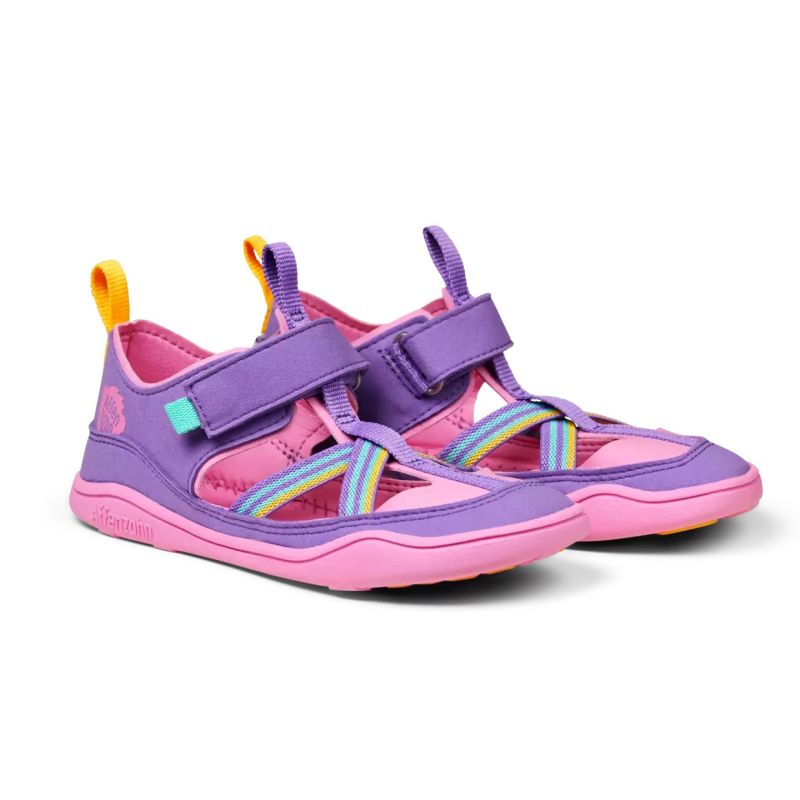
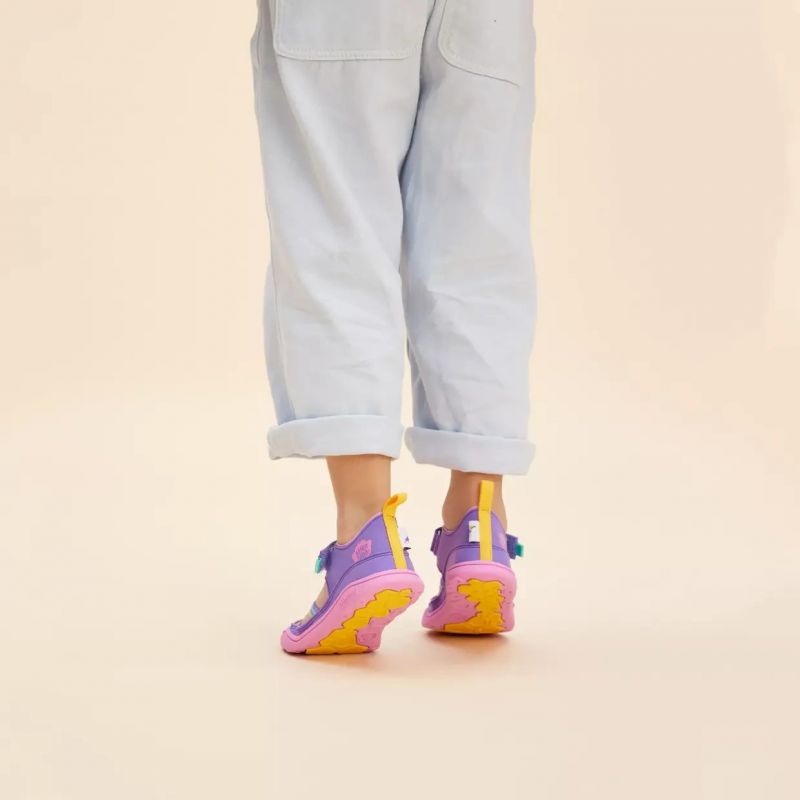
And then there was the walk down to the beach. I wore my barefoot beach shoes, and it was a breeze. Even the sand, which, let's face it, is hard work for anyone to walk through, felt much more manageable. There was something really lovely about being able to walk down to the beach, feel the sand underneath my feet and not have that familiar feeling of my feet are going to be killing me by the time we get there.
And perhaps that's why this holiday stayed with me. It wasn't really about the shoes. It was about what they had allowed me to experience. Four years earlier, I probably wouldn't have imagined myself wandering around a hotel complex barefoot for most of the day without giving it a second thought. But that's exactly what happened.
And it made me wonder how many other women are walking around in uncomfortable shoes every single day, assuming that their feet are the problem. Maybe they're not.

It isn't about giving up the things you love
This isn't about becoming someone who only wears sensible shoes. It's not about sacrificing style, or walking around in something that looks like it belongs in a cupboard marked practical footwear.
Barefoot shoes have come a long way. You can find trainers, boots, sandals, ballet flats and everyday shoes that look like you. Because comfort shouldn't mean disappearing into beige, and being a mum certainly doesn't mean you have to spend your days in shoes that make your feet miserable.
You deserve shoes that fit your life. School runs. Work. Shopping. Dog walks. Days out. Coffee with a friend. Running around after the children. Standing in the kitchen making dinner. All those ordinary moments that make up your life.
If you're just starting out, here are 5 quick tips on starting to wear barefoot shoes that will help you ease in gently.


And perhaps the biggest change is what happens in your head
Because once you experience genuine comfort, you start questioning things. Not just your shoes, but the things you've accepted because you've been told they're normal. The little irritations you've learned to ignore. The way you've always bought shoes because they look nice, then spent the rest of the day trying to forget you're wearing them.
You realise that "breaking shoes in" doesn't have to mean enduring weeks of rubbing. That your toes don't have to touch the sides. That a shoe doesn't have to feel tight to be supportive. That you don't have to choose between looking good and feeling good.
And perhaps most importantly:
You realise that discomfort was never the price you had to pay for wearing shoes. You just thought it was. Until you discovered another way. And once you've felt that freedom, it's very hard to go back. Your feet notice. And so do you.
Remember that quick trip into Asda that felt like an endurance event? Next time you're there, just notice your feet. Notice how they feel inside your shoes. Notice whether you're already thinking about getting home and taking them off.
That awareness: that's the start of it.
Maybe that's the real journey into barefoot shoes for women. Not suddenly becoming a barefoot person. Not throwing every pair of shoes you own into the bin. Not following a trend. It's simply noticing. Noticing how your shoes actually feel. Noticing what happens to your feet after a day of walking. Noticing how often you can't wait to take them off.
And then, perhaps for the first time, asking yourself a question you never thought to ask before:
What if shoes are supposed to feel good?
Because once you ask that question, you might never look at your shoes in quite the same way again.

Frequently asked questions
What is a barefoot shoe?
Think of it as the closest thing to being barefoot while still having something between your skin and the ground. Conventional shoes do three things that barefoot shoes deliberately don't: they squeeze your toes into a narrow point, they lift your heel above your toes, and they wrap your foot in a stiff sole that stops you feeling anything beneath you. A barefoot shoe simply removes those things. Your toes have room to spread, your heel sits level with the rest of your foot, and the sole is thin and bendy enough that you can feel the pavement, the grass, the texture of the floor. It's not a new concept - humans walked this way for thousands of years before thick, rigid shoes became the norm. The name can be a bit misleading though; you're not actually barefoot in them. They just let your foot move the way it would if you were. If you're curious, have a look at our women's barefoot shoes or men's barefoot shoes to see what they actually look like.
What makes a shoe a barefoot shoe?
A foot-shaped wide toe box, flexible and thin sole, and zero or minimal heel-to-toe drop. The shoe lets your foot move naturally instead of restricting it. Your toes can spread, your foot can flex, and there's no raised heel tilting you forward.
Are barefoot shoes comfortable?
For most people, yes. The wide toe box and flexible sole mean your toes can spread and your foot can move the way it's meant to. It can take a short while to get used to if you've worn rigid shoes for years, but once your feet adjust, it's a very different kind of comfort.
Are barefoot shoes suitable for beginners?
Absolutely. If you're new to barefoot shoes, start by wearing them for a few hours a day and gradually build up. We've put together 5 quick tips to help you get started.
Can you wear barefoot shoes every day?
Yes. Once your feet have adjusted, many people wear them for everything from school runs to work to dog walks. They come in trainers, boots, sandals and everyday styles, so there's usually something for every part of your day.
Leave a comment